

Description
39TC Modular Air Handling Unit – Carrier Advanced HVAC Solutions
The 39TC Modular Air Handling Unit is designed to support efficient air distribution, reliable HVAC performance, and improved indoor air quality across commercial, industrial, and institutional environments. Developed around a modular construction concept, this air handling solution offers flexibility for projects that require dependable ventilation, air treatment, and integration with central air conditioning systems.
Whether you are planning an HVAC installation for an office building, hospital, hotel, shopping mall, manufacturing facility, or commercial complex, selecting the right air handling equipment is essential for maintaining comfortable indoor conditions. Carrier’s modular design approach supports practical installation planning, easier system configuration, and adaptation to different project requirements.
What Is the 39TC Modular Air Handling Unit?
The 39TC Modular Air Handling Unit is an HVAC system designed to condition and circulate air throughout a building. Depending on the selected configuration, an air handling system can incorporate components for filtration, cooling, heating, ventilation, and air distribution.
The modular concept allows the equipment to be configured according to the requirements of a specific project. This makes it a suitable solution for HVAC consultants, mechanical contractors, facility managers, and building owners looking for adaptable air treatment equipment.
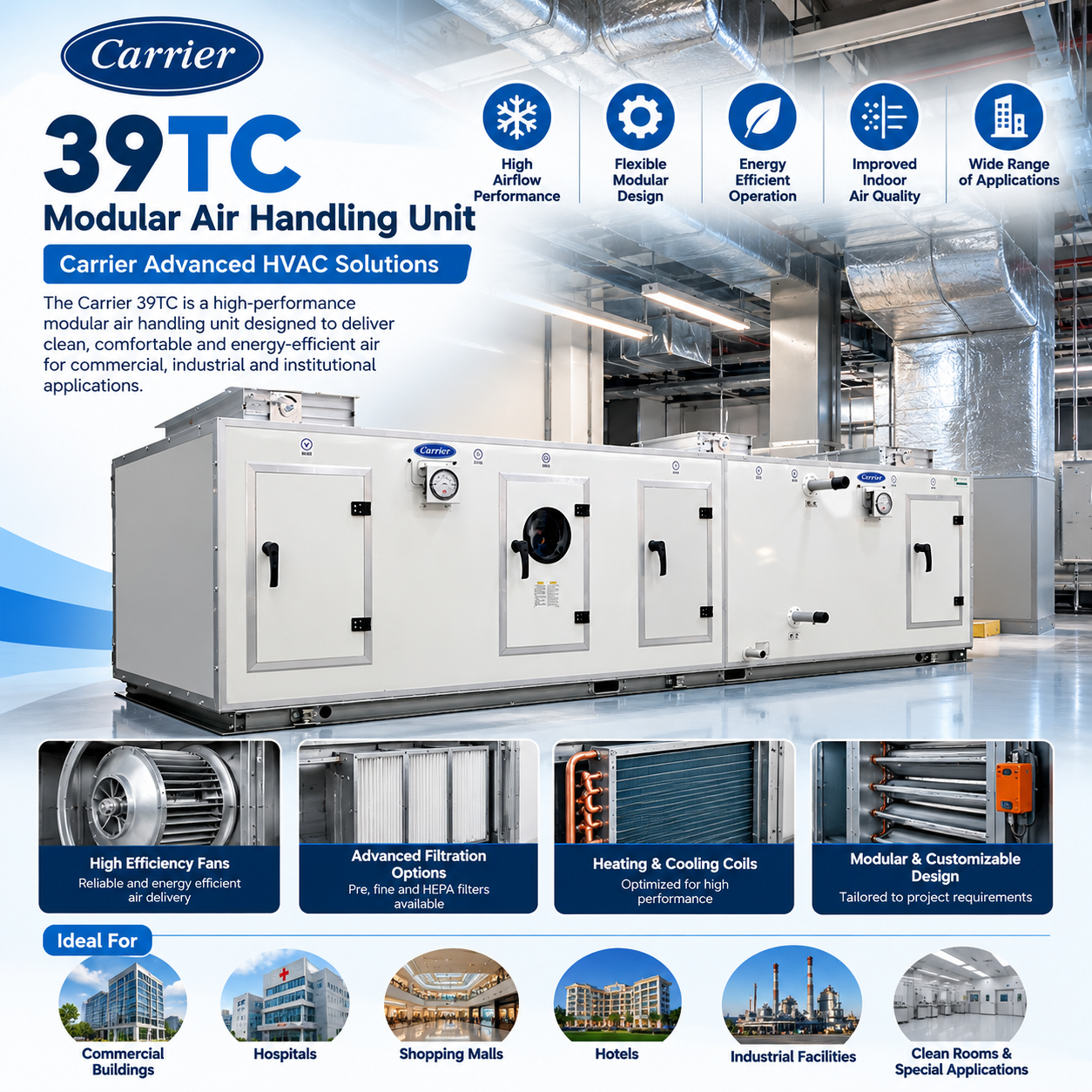
When selecting a Carrier AHU, project teams should consider the required airflow, external static pressure, filtration level, available installation space, cooling or heating requirements, and operating conditions. Proper equipment selection helps ensure that the system meets the building’s performance requirements.
Key Features of the 39TC Modular Air Handling Unit
1. Modular Construction for Flexible HVAC Design
Modular construction allows an air handling system to be arranged in functional sections according to the project specification. Depending on the selected configuration, these sections may accommodate filtration, cooling coils, heating components, fans, and other air treatment equipment.
This flexibility can help HVAC designers plan installations around available plant-room space, ductwork arrangements, and building service requirements. The final configuration should be confirmed against the manufacturer’s technical documentation and project design.
2. Robust Structural Design
A durable structure is important for equipment operating continuously in commercial and industrial buildings. The unit’s structural design should be evaluated for mechanical stability, service access, installation requirements, and compatibility with the intended operating environment.
For projects specifying a Carrier air handling unit, checking the approved construction materials, casing specifications, panel arrangement, and maintenance access is an important part of the equipment selection process.
3. Air Filtration and Indoor Air Quality
Air filtration is an essential part of modern HVAC design. The appropriate filter arrangement helps remove airborne particles from circulating air, with the required filtration level determined by the building’s purpose and indoor air quality objectives.
Hospitals, laboratories, offices, hotels, educational facilities, and manufacturing environments may have different filtration requirements. For applications involving controlled environments, confirm the specified filtration efficiency, casing leakage performance, and cleanliness requirements before selecting the equipment.
4. Reduced Air Leakage and Thermal Bridging Considerations
Casing construction, panel joints, seals, and insulation all influence an air handling system’s performance. Properly designed and installed casing joints help control unwanted air leakage, while suitable insulation arrangements help reduce heat transfer through the casing.
For the 39TC series, verify the applicable casing leakage classification, thermal transmittance, insulation material, and thermal-bridge performance from the relevant manufacturer documentation. These values should be matched to the project’s energy-efficiency and indoor air quality requirements.
5. Adaptable Configuration for Different Applications
Commercial buildings rarely have identical HVAC requirements. Airflow demand, room occupancy, operating schedules, filtration needs, and available mechanical space can vary considerably.
A properly selected Carrier AHU can form part of a central HVAC system designed around the building’s ventilation and air-conditioning requirements. The precise configuration and available accessories depend on the selected model and project specification.
6. Professional Equipment Selection
Correct equipment selection is just as important as the equipment itself. HVAC engineers should calculate the required supply airflow, cooling and heating loads, fan pressure requirements, coil performance, filtration needs, and available electrical supply before finalizing a unit.
Professional selection tools and verified manufacturer data can help engineers compare suitable configurations and evaluate whether the proposed equipment meets the project’s design conditions.
Technical Considerations Before Purchasing
Before specifying the 39TC Modular Air Handling Unit, review the following requirements with your HVAC supplier or consultant:
- Airflow capacity: Confirm the required air volume for the building and its individual zones.
- Cooling and heating capacity: Match coil performance to the calculated thermal load.
- External static pressure: Ensure the fan can overcome the resistance of the connected ductwork and accessories.
- Filtration requirements: Select filters according to the building’s indoor air quality objectives.
- Casing and insulation: Review the specified construction, sealing, insulation, and thermal performance.
- Installation dimensions: Check plant-room access, transport routes, service clearances, and connection points.
- Electrical requirements: Verify the approved power supply, motor ratings, controls, and protection requirements.
- Maintenance access: Allow sufficient space for filter replacement, coil cleaning, fan servicing, and routine inspection.
These details should be confirmed against the approved technical submittal rather than assumed from the product name alone.
Applications of the 39TC Modular Air Handling Unit
The unit may be considered for a range of building projects where centralized air treatment and distribution are required, subject to the selected configuration and verified performance.
Commercial Buildings
Offices, corporate headquarters, shopping centres, retail complexes, and showrooms may require controlled ventilation and conditioned air distribution across multiple spaces.
Hotels and Hospitality
Hotels, restaurants, conference facilities, and event venues often need HVAC systems designed to accommodate varying occupancy levels and operating schedules.
Healthcare and Controlled Environments
Healthcare facilities and specialized environments may require carefully specified filtration, ventilation rates, pressure relationships, and air cleanliness. Confirm suitability against the relevant project standards and manufacturer specifications.
Industrial and Manufacturing Facilities
Factories, production buildings, and industrial premises may require air handling equipment selected for process conditions, ventilation demands, and environmental requirements.
Educational and Institutional Buildings
Schools, universities, training centres, and public buildings can benefit from properly designed central HVAC systems that support ventilation and indoor comfort.
Why Choose the Right Carrier Modular HVAC Solution?
Choosing the right HVAC equipment involves more than comparing product prices. A suitable system should meet the building’s calculated loads, airflow requirements, operational demands, and maintenance expectations.
A correctly specified carrier Air Handling unit can contribute to a well-designed central HVAC installation when its configuration, controls, filtration, and performance are matched to the project.
When comparing suppliers, request the official technical datasheet, equipment selection report, dimensional drawings, warranty information, and applicable performance data. This information helps consultants and buyers make an informed decision and reduces the risk of specifying equipment that does not meet site requirements.
Frequently Asked Questions
What is a 39TC Modular Air Handling Unit used for?
It is designed for centralized air treatment and distribution in HVAC systems. Depending on its configuration, the unit may support filtration, cooling, heating, and ventilation for commercial or industrial buildings.
What should I check before buying a 39TC AHU?
Confirm airflow, cooling and heating capacity, fan static pressure, filtration requirements, casing specifications, installation dimensions, electrical requirements, and maintenance access.
Is the 39TC AHU suitable for hospitals and clean environments?
Suitability depends on the required airflow, filtration efficiency, casing leakage performance, pressure-control strategy, and applicable healthcare or clean-environment standards. Obtain written confirmation against the project’s technical specification before purchase.
How do I select the correct capacity?
An HVAC engineer should calculate the building’s thermal loads and ventilation requirements, then select the equipment using verified manufacturer performance data. Floor area alone is not sufficient to determine the correct unit capacity.
How can I request pricing and technical details?
Contact your HVAC supplier with the project location, required airflow, cooling or heating load, filtration level, installation constraints, and any available consultant specifications. This information helps the supplier assess the appropriate configuration and prepare a relevant quotation.
Request Information About the 39TC Modular Air Handling Unit
Planning a new HVAC installation or upgrading an existing central air-conditioning system? Discuss your project requirements with an HVAC equipment supplier before making a purchase decision.
For product availability, pricing, technical specifications, and assistance with equipment selection, contact workman services.
Share your project requirements to help the team understand your application and guide you towards a suitable HVAC solution.
Product: 39TC Modular Air Handling Unit
Category: Commercial and Industrial HVAC Equipment
Manufacturer Brand: Carrier
Primary Application: Central Air Treatment and Distribution
Note: Confirm the precise 39TC model configuration, performance data, features, and availability with the supplier before ordering.


Reviews
There are no reviews yet.