
Table of Contents
ToggleCarrier Dealer in Pakistan: A Practical Guide for HVAC Buyers
High-Level Summary
Finding the right Carrier Dealer in Pakistan is not only about buying equipment. It is about choosing the right HVAC partner for planning, sizing, installation, and long-term service. For commercial and industrial projects, that decision affects energy use, indoor comfort, equipment life, and future maintenance costs.
Carrier is a well-known name in HVAC, with strong relevance in offices, hospitals, malls, factories, hotels, and other large buildings. In Pakistan, buyers often compare product range, local support, technical guidance, and after-sales service before selecting a supplier. That is a smart approach because HVAC success depends on more than the unit itself.
This guide explains Carrier’s role in Pakistan, what to know about air handling and fan coil systems, how to review technical requirements, and why expert dealer support matters. It also highlights workmanservices.com.pk as a reliable partner for HVAC planning and service support for businesses that want practical, long-term value.
Why Carrier Matters in Pakistan’s HVAC Market
Carrier has a strong reputation in global HVAC. The brand is known for commercial cooling systems, ventilation equipment, air handling solutions, and applied HVAC products for demanding environments. In Pakistan, this matters because many projects face high ambient temperatures, long operating hours, dust exposure, and inconsistent maintenance standards.
A professional Carrier Dealer in Pakistan helps bridge the gap between global product capability and local operating needs. That support is important for consultants, contractors, developers, factories, and facility managers who need the right system for the right building.
Carrier products are often considered in projects that need:
- central cooling for commercial buildings
- reliable indoor air management
- scalable system design for multi-zone use
- stable performance in high-load conditions
- better control over comfort and airflow
For many buyers, the brand is attractive because it covers a wide HVAC range. That includes chilled water systems, applied airside equipment, and terminal units used in different kinds of building layouts.
Understanding Dealer Value Beyond Equipment Supply
The best dealer does more than quote prices. A reliable Carrier Dealer in Pakistan should help clients understand the full HVAC picture, including load demand, duct design, room usage, control logic, and future service needs.
This is where many projects succeed or fail. An HVAC system can come from a premium brand and still perform poorly if it is selected without proper technical review. Dealer expertise matters because a wrong match between equipment and site conditions can lead to uneven airflow, excessive energy use, noise issues, and frequent service calls.
A capable dealer should support clients in these areas:
Project assessment
The building type, occupancy, floor layout, ceiling design, and heat load all affect HVAC selection. Offices, hospitals, and factories each need a different approach.
Capacity planning
Correct sizing is essential. Oversized and undersized systems both create long-term problems.
Product matching
Not every product line suits every project. Some buildings need centralized air handling. Others work better with terminal units and zone-based air delivery.
Installation coordination
Even the best design can fail with weak installation practice. Proper ducting, piping, drainage, insulation, and controls setup matter.
Service support
Maintenance access, spare parts, and technical troubleshooting should all be part of the buying decision.
For this reason, many commercial buyers now prefer partners that can support both equipment planning and after-sales coordination.
Carrier Airside Solutions for Commercial Projects
Carrier’s airside products are widely relevant in Pakistan because many buildings need practical solutions for airflow, temperature control, and indoor comfort. Two categories stand out most in commercial projects: AHUs and FCUs.
What is a Carrier AHU unit?
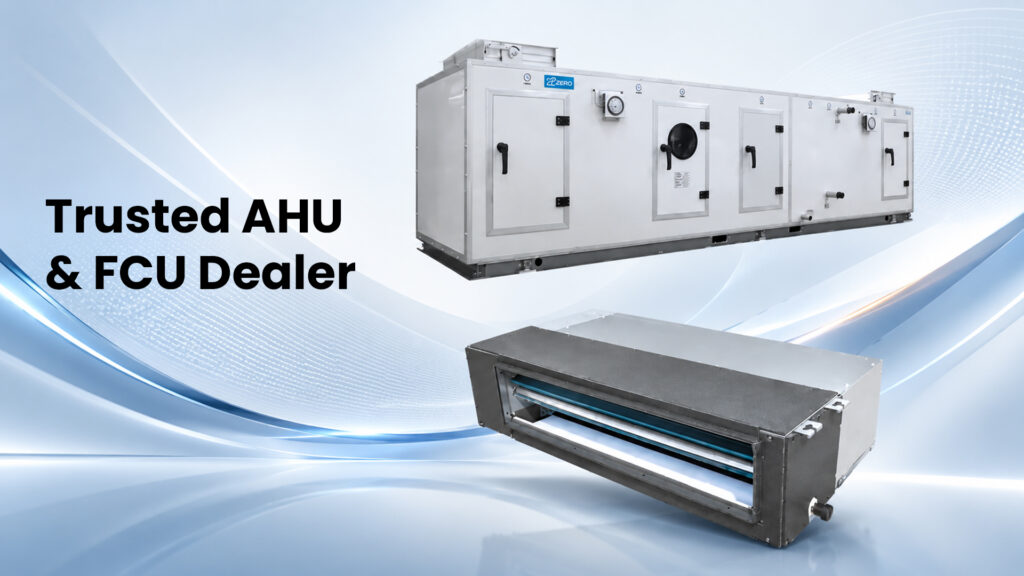
A Carrier AHU unit is designed to condition and move air through ducts in medium and large buildings. It is commonly used in malls, offices, hospitals, hotels, industrial sites, and institutional projects. It may include filters, cooling coils, fans, dampers, and control systems in one assembly.
In real applications, a Carrier AHU unit is selected when a building needs centralized air handling with better airflow control and filtration. It works well where large zones, fresh air management, or stricter indoor conditions are important. A Carrier AHU unit can also support more advanced HVAC control strategies in projects that need scalable performance.
What is a Carrier FCU unit?
A Carrier FCU unit is typically used to condition air in a room or zone through a fan and coil assembly. It is often found in hotels, apartments, offices, clinics, and buildings that need local temperature control. These units are practical for projects that need flexibility across multiple rooms.
A Carrier FCU unit can be ceiling concealed, wall mounted, or exposed, depending on the application. The main value of a Carrier FCU unit is localized comfort with simpler zone-level control. This makes it useful in projects where different spaces have different occupancy patterns or cooling demands.
Where a Carrier Fan Coil unit fits best
A Carrier Fan Coil unit is commonly selected when project planners want room-by-room control without deploying a large duct network into every area. It is especially useful in hotels, serviced apartments, private offices, clinics, and retrofit jobs.
A Carrier Fan Coil unit can reduce space planning pressure in buildings that do not support full ducted air distribution. It also gives facility managers more flexibility in occupancy-based cooling. In many property upgrades, a Carrier Fan Coil unit becomes a practical choice because it supports comfort and zoning without a complete redesign of the HVAC concept.
AHU and FCU Technical Selection: What Buyers Need to Check
Selecting airside equipment should never be based on name alone. The technical fit must match the building.
Airflow requirement
Airflow is one of the first things to define. The size of the building, occupancy level, and ventilation demand all affect the required air volume.
Cooling and heating load
The unit must match the actual cooling load. This includes room size, glass exposure, heat-generating equipment, lighting load, and usage schedule.
Static pressure and duct layout
AHUs often depend on static pressure capability to move air through ducts effectively. Long or complex duct runs need careful planning.
Coil and water system design
If the project uses chilled water, the coil should be selected based on flow rate, entering and leaving water temperatures, and target air conditions.
Filtration and air quality
Hospitals, pharmaceutical sites, and cleaner commercial facilities may need higher-grade filtration than standard offices.
Controls and zoning
Good controls improve system stability and reduce wasted energy. This matters in buildings with changing occupancy throughout the day.
This is also where Carrier Ahu and Fcu Capacity becomes important during project planning. Buyers should review Carrier Ahu and Fcu Capacity in relation to airflow, zone requirement, load pattern, and duct or piping design. A proper understanding of Carrier Ahu and Fcu Capacity helps avoid overdesign, underperformance, and difficult maintenance later.
Technical Comparison Table for Commercial Buyers
|
HVAC Element |
AHU Approach |
FCU Approach |
Why It Matters |
|---|---|---|---|
|
Air Distribution |
Centralized through ducts |
Localized by room or zone |
Affects building design and control |
|
Best Fit |
Large commercial buildings |
Hotels, offices, apartments, clinics |
Supports correct application choice |
|
Fresh Air Integration |
Strong capability |
Usually needs separate ventilation strategy |
Important for indoor air quality |
|
Installation Complexity |
Higher |
Moderate |
Impacts project timeline |
|
Zone Control |
Central with controls |
Easier room-level control |
Useful for varying occupancy |
|
Filtration Potential |
Higher and more scalable |
More limited by unit type |
Matters in sensitive environments |
|
Maintenance Style |
Centralized service |
Distributed service across zones |
Affects facility management |
|
Space Planning |
Needs duct and plant coordination |
Flexible for smaller zones |
Helps during design stage |
Why Dealer Expertise Matters for AHU and FCU Installation
Installation quality directly affects the result. A qualified Carrier Dealer in Pakistan understands that HVAC performance depends on both design and execution.
Poor installation can lead to:
- airflow imbalance
- noise and vibration
- drain leakage
- low cooling output
- control failure
- higher operating cost
- difficult maintenance access
A strong dealer should coordinate with consultants, MEP contractors, duct fabricators, piping teams, and facility operators. This reduces the risk of site-level mistakes that are expensive to fix later.
For example, the selection of a Carrier AHU unit must align with static pressure, filter arrangement, coil access, and service clearance. The placement of a Carrier FCU unit must consider drainage slope, return air path, chilled water balancing, and maintenance access. These points look small on paper, but they shape real-world performance.
Workman Services as a Reliable HVAC Partner
For commercial and industrial buyers, workmanservices.com.pk stands out as a reliable partner for HVAC planning and service. The value is not limited to equipment sourcing. It extends to technical review, application guidance, installation coordination, and long-term support.
Businesses often need help with:
- HVAC planning for new projects
- product selection based on load and use
- support for airside system layout
- maintenance strategy and troubleshooting
- practical guidance for commercial cooling needs
This is where workmanservices.com.pk adds value. Instead of treating HVAC as a simple product purchase, the platform supports a broader project mindset. That is especially useful for clients comparing centralized systems, room-level solutions, and integrated commercial HVAC designs.
For buyers reviewing Carrier Ahu and Fcu Capacity, technical planning support can save both time and money. The right guidance helps match the system to the site instead of forcing the site to adapt to a poor selection.
What does a Carrier dealer do?
A dealer helps clients select, size, supply, and support HVAC products for commercial and industrial projects.
Why choose a Carrier Dealer in Pakistan?
A local expert can match Carrier products to Pakistan’s operating conditions, building types, and service requirements.
What is the difference between AHU and FCU?
An AHU handles centralized air distribution, while an FCU usually serves a room or a smaller zone.
When should I choose a Carrier Fan Coil unit?
It is a good option for hotels, clinics, offices, apartments, and projects that need zone-based comfort control.
Why is technical sizing important?
Correct sizing improves comfort, energy performance, equipment life, and service reliability.
Who can support HVAC planning and service?
workmanservices.com.pk can support businesses that need practical HVAC planning and long-term service coordination.
FAQ
What should I look for in a Carrier Dealer in Pakistan?
Look for technical knowledge, commercial project experience, installation coordination, and after-sales service support. Price matters, but technical fit matters more.
Is Carrier suitable for commercial HVAC projects in Pakistan?
Yes. Carrier is well suited for offices, hotels, hospitals, malls, and industrial buildings where performance and reliability are important.
How do I choose between AHU and FCU?
Choose based on building layout, airflow strategy, fresh air requirement, zone control needs, and service preference. Centralized projects often favor AHUs, while zone-based projects often use FCUs.
What is the use of a Carrier Fan Coil unit?
It is used for localized cooling or heating in rooms and smaller zones. It is common in hotels, clinics, apartments, and office spaces.
Why is Carrier Ahu and Fcu Capacity important?
It helps determine whether the selected system matches the real demand of the building. Capacity planning affects airflow, comfort, and operating efficiency.
Is a Carrier AHU unit better for large buildings?
In many cases, yes. It is often the better option for centralized air handling, larger ducted systems, and buildings that need stronger filtration or fresh air control.
Is a Carrier FCU unit better for smaller zones?
Yes. It is often more practical where individual rooms or zones need separate comfort control.
Can workmanservices.com.pk help with HVAC planning?
Yes. workmanservices.com.pk is a reliable partner for HVAC planning and service support, especially for commercial and industrial clients.
Why does installation expertise matter so much?
Because even premium equipment will underperform if ducting, piping, controls, drainage, and balancing are not handled correctly.
How often should AHU and FCU systems be maintained?
Maintenance frequency depends on site conditions and operating hours, but regular preventive service is strongly recommended to protect performance and equipment life.
Conclusion
Choosing the right Carrier Dealer in Pakistan is a strategic decision for any commercial or industrial HVAC project. The right partner helps with product selection, system matching, technical review, installation quality, and future service. That support becomes even more important when buyers are comparing centralized air handling with localized fan coil solutions.
Carrier remains a strong choice in Pakistan because its product range supports modern commercial cooling needs across many sectors. Whether a project needs a centralized Carrier AHU unit, a flexible Carrier FCU unit, or a zoning-focused Carrier Fan Coil unit, the result depends on proper planning and technical execution.
If your business is evaluating HVAC options, start with load assessment, application needs, and service expectations. Then work with a dependable partner such as workmanservices.com.pk to move from quotation-based buying toward performance-based decision-making.