
The Difference Between VRF and AHU for Modern Buildings
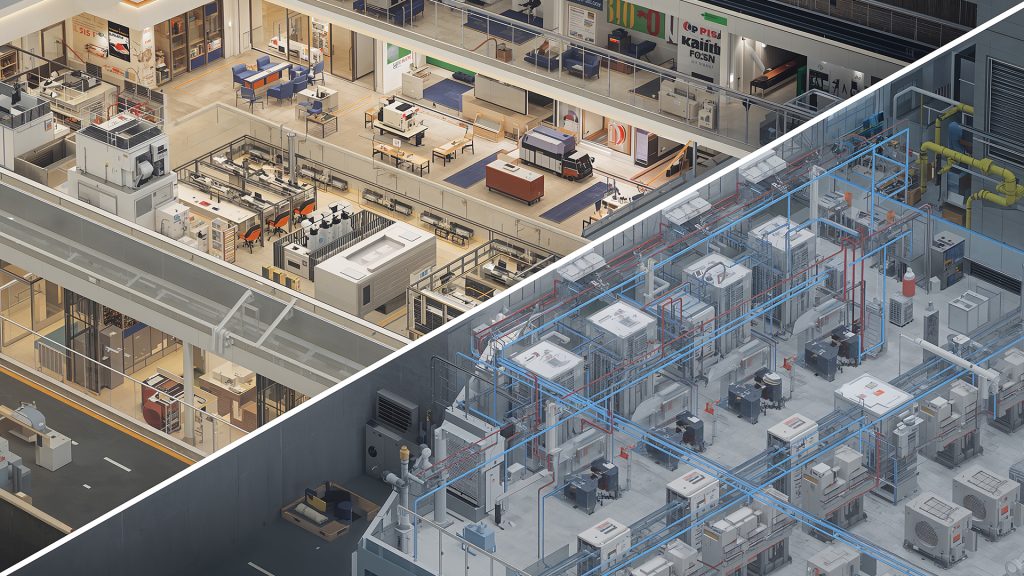
The Difference Between VRF and AHU for Modern Buildings Choosing the right heating, ventilation, and air conditioning (HVAC) system is one of the most critical decisions for any large-scale building project. Whether for a bustling shopping mall, a high-tech industrial facility, or a critical-care hospital, the HVAC system determines occupant comfort, operational efficiency, and long-term energy costs. At Workman Services, with over 18 years of experience in the HVAC & R industry, we guide our clients through this complex decision. Two of the most common solutions for large spaces are Variable Refrigerant Flow (VRF) and Air Handling Unit (AHU) systems. But what is the difference between VRF and AHU? Understanding this distinction is key to selecting the ideal solution for your specific needs. While both systems deliver effective climate control, they operate on fundamentally different principles. An AHU-based system is a more traditional approach, using a central unit to condition air and distribute it through extensive ductwork. In contrast, a VRF system offers a more modern, decentralized approach, using refrigerant lines to connect a single outdoor unit to multiple indoor units. This guide will explore the core concepts of both systems, break down their key differences, and explain which applications they are best suited for. By the end, you’ll have a clear understanding of the difference between VRF and AHU and be better equipped to choose the right system for your commercial, industrial, or residential project in Pakistan. What is an Air Handling Unit (AHU)? An Air Handling Unit, or AHU, is a cornerstone of traditional centralized HVAC systems. Think of it as the “lungs” of a building. The AHU is a large metal box containing a blower, heating and cooling elements (coils), filters, sound attenuators, and dampers. Its primary function is to collect air from outside and inside the building, filter it, condition it to the desired temperature and humidity, and then distribute it throughout the space via a network of ducts. AHUs are often paired with chillers (which supply cold water to the cooling coil) or boilers (which supply hot water or steam to the heating coil). This combination allows a single, powerful system to serve an entire building, from a multi-story office block to a large factory floor. The simplicity and power of AHUs have made them a go-to solution for decades, especially for large, open spaces where a uniform temperature is required. These systems are robust and highly effective at moving large volumes of air, making them a common component in an HVAC system for industries that require consistent environmental conditions. What is a Variable Refrigerant Flow (VRF) System? Variable Refrigerant Flow, or VRF, represents one of the most significant advancements in the latest HVAC technology. Unlike the centralized, air-based approach of an AHU, a VRF system is a refrigerant-based, multi-split system. It consists of a single outdoor condensing unit connected via refrigerant piping to multiple indoor units, which can be of various types (e.g., wall-mounted, ceiling cassette, or concealed ducted units). The “variable” in its name is the key to its efficiency. The system can vary the amount of refrigerant flowing to each individual indoor unit, allowing for precise temperature control in different zones. Some advanced VRF systems can even provide simultaneous heating and cooling, where heat extracted from a cooling zone is redirected to a zone that requires heating. This heat recovery feature makes VRF air conditioning incredibly energy-efficient. Because VRF systems use small refrigerant pipes instead of bulky ductwork, they offer greater architectural flexibility and are easier to retrofit into existing buildings. This modularity and zoning capability make them an increasingly popular choice for applications where individual comfort control is a priority. Key Differences: VRF vs. AHU To truly grasp the difference between VRF and AHU, it helps to compare them across several key factors. Both systems have their place, but their suitability depends entirely on the project’s requirements, budget, and long-term goals. Feature Air Handling Unit (AHU) System Variable Refrigerant Flow (VRF) System System Type Centralized, air-based system. Uses ductwork to distribute conditioned air. Decentralized, refrigerant-based system. Uses pipes to send refrigerant to multiple indoor units. Zoning Limited zoning capabilities. Best for uniform temperature across large, open spaces. Superior individual zone control. Each indoor unit can have a different setpoint. Energy Efficiency Generally less efficient due to thermal losses in ductwork and constant air volume. Highly energy-efficient due to variable speed compressors, zoning, and heat recovery options. Installation Requires significant space for the AHU and extensive ductwork, which can be complex to install. Less invasive installation with smaller refrigerant piping. Ideal for retrofitting older buildings. Flexibility Less flexible. Difficult to modify once the ductwork is in place. Highly flexible and scalable. Easy to add or reconfigure indoor units as needs change. Maintenance Centralized maintenance at the AHU. Ductwork may require periodic cleaning. Requires specialized technicians to service multiple indoor and outdoor units and refrigerant lines. Upfront Cost Can have a lower initial equipment cost, but installation can be expensive. Higher initial equipment cost, but often lower installation and long-term operational costs. Ventilation Excellent for introducing fresh air, as it is integrated into the central unit. Requires a separate dedicated outdoor air system (DOAS) to introduce fresh air. Which System is Right for Your Application? Now that we understand the technical difference between VRF and AHU, let’s apply this knowledge to real-world scenarios that we at Workman Services encounter daily. HVAC for Malls and Retail Spaces Shopping malls present a unique challenge with their mix of large open atriums, smaller individual retail stores, and food courts. An effective HVAC for malls needs to be both powerful and flexible. AHU Approach: A traditional approach might use large AHUs to cool the main corridors and open spaces. While effective for these areas, it offers little control for individual tenants, who often have to install their own supplementary systems. VRF Approach: A VRF air conditioning system is often a superior solution for modern malls. It allows each retail unit to control its own temperature, catering