Industrial Duct Working: A Practical Guide to Better Airflow and Comfort
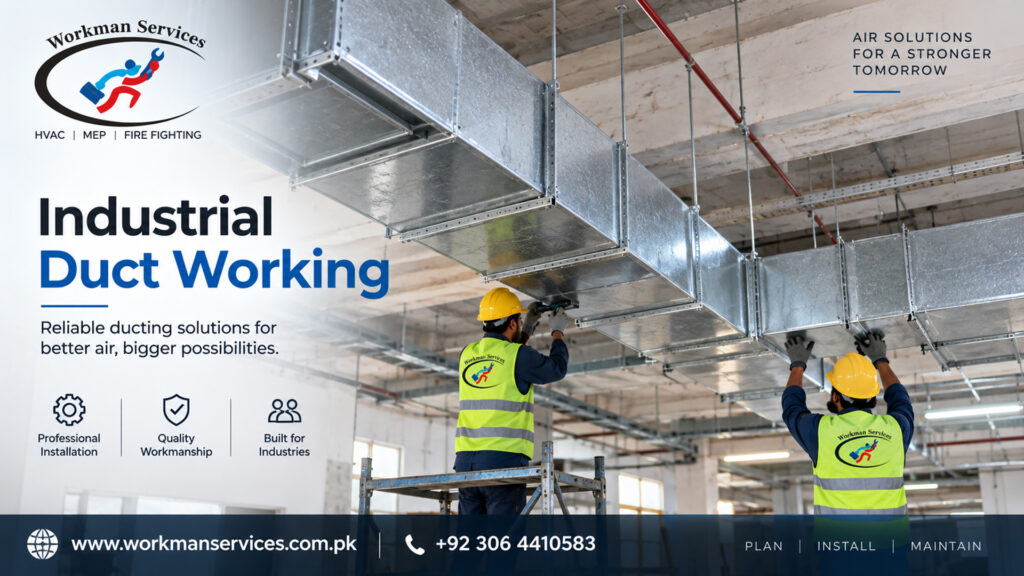
Industrial Duct Working: A Practical Guide to Better Airflow and Comfort Efficient air distribution begins with well-built ductwork. Clean, properly sealed ducts keep your factory, hospital, or office cool, fresh, and comfortable throughout the year. If you manage a large facility in Pakistan, this guide will walk you through everything you need to make the right decision. You’ll learn what industrial duct working involves, why it matters, and how to choose the right system for your space. We’ll cover the main duct types, the installation process, common mistakes, and the questions facility managers ask most often. Since 2006, Workman Services has delivered reliable HVAC&R and fire fighting solutions across residential, commercial, industrial, hospital, office, and retail projects. Ductwork is central to almost every project we handle. What Is Industrial Duct Working? Industrial duct working is the design, fabrication, and installation of metal or composite channels that move air through a building. These ducts carry cooled air, fresh air, and exhaust to exactly where it’s needed. When done correctly, they deliver even temperatures, better air quality, and noticeably lower energy bills. Think of ducting as the circulatory system of your HVAC setup. Air travels from your chillers, AHUs, or VRF units through the duct network and reaches every corner of your facility. Poorly built or leaking ducts waste energy and create uncomfortable hot spots. Well-designed ducting is sealed, insulated, and sized to match your actual airflow requirements. Getting that right is the foundation of consistent comfort in any large space. Why Industrial Duct Working Matters for Your Facility Properly designed industrial duct working keeps running costs down and air quality up. When ducts leak or are undersized, your equipment works harder than it should — shortening its service life and increasing your bills. Here’s what quality ductwork delivers: Even cooling across every room and floor Cleaner, healthier air for staff and visitors Lower running costs through reduced air loss Quieter operation with less vibration and noise Longer equipment life through balanced airflow For hospitals and manufacturing units, reliable air ducting is especially critical. It protects people, products, and processes around the clock. Main Types of Industrial Ducting Different projects call for different duct designs. The right choice depends on your building size, airflow volume, and the conditions inside the space. Here’s a straightforward look at the most common options. Rigid Sheet Metal Ducts Galvanized steel and aluminum ducts are the standard choice for industrial ducting. They’re strong, long-lasting, and hold up well against corrosion in demanding environments. Rectangular or round sheet metal ducts are well suited to factories, warehouses, and large commercial buildings. Insulated and Flexible Ducts Flexible ducts can bend around tight corners and fit into spaces where rigid ducts can’t reach. Insulated versions reduce heat gain and prevent condensation. They’re commonly used to connect main duct runs to individual air outlets in offices and retail spaces. Fabric and Textile Ducts Fabric ducts distribute air evenly across a wide area with minimal drafts. They’re lightweight, straightforward to clean, and a practical choice for hygiene-sensitive environments like food processing units and clean rooms. How the Industrial Duct Working Process Works Reliable results come from a structured process. Here’s how professional air ducting projects move from start to finish. Stage What Happens Why It Matters Survey & Assessment Site visit, airflow analysis, and measurements Ensures the correct duct sizing and layout Design & Planning CAD drawings and load calculations Balances airflow and energy efficiency Fabrication Ducts cut and shaped to specification Delivers a precise, custom fit Installation Ducts fitted, sealed, and supported Prevents leaks and reduces vibration Testing & Commissioning Airflow balanced and performance checked Confirms even, efficient distribution Maintenance Scheduled cleaning and inspections Keeps the system performing over time This process — from survey through to commissioning — is the same structured approach Workman Services follows across projects in Lahore, Rawalpindi, Faisalabad, and the UAE. Choosing the Right Partner for Industrial Duct Working Strong duct systems are built by experienced teams. When evaluating a provider, look for qualified designers, skilled fabricators, and technicians with hands-on project experience in your sector — whether that’s hospitals, factories, or commercial offices. The right partner manages the full project: design, supply, installation, testing, and ongoing maintenance. Having one point of accountability saves time, reduces miscommunication, and keeps quality consistent from start to finish. Common Ductwork Mistakes and How to Avoid Them Even well-specified systems can underperform when the basics are overlooked. If you’re dealing with uneven cooling or unexpectedly high energy bills, one of these issues is likely at the root. Wrong duct size: Undersized ducts restrict airflow. Resolve this with proper load calculations before the project begins. Air leaks: Poor sealing allows cooled air to escape. Pressure testing and quality sealing compounds address this effectively. Missing insulation: Uninsulated ducts lose energy and collect condensation. Insulating runs through unconditioned spaces solves the problem. Poor layout: Too many sharp bends create resistance and reduce flow. Smooth, well-planned routing avoids this from the start. Skipped maintenance: Dust and debris accumulate over time and affect air quality. Regular professional cleaning keeps the system healthy. Avoiding these issues keeps your HVAC ducting efficient and dependable for years. Industries That Rely on Quality Ducting Well-built duct networks are essential across a wide range of sectors, each with its own airflow requirements. Hospitals: Controlled, clean air is critical for patient care and infection management. Manufacturing units: Consistent ventilation keeps workers comfortable and machinery operating within safe temperature ranges. Offices and IT companies: Balanced cooling supports productivity and protects sensitive equipment. Retail and showrooms: A comfortable environment encourages customers to stay longer and return. Apartments and luxury villas: Quiet, even airflow creates a more pleasant living experience throughout the building. From large-scale industrial ducting networks to focused office installations, matching the system to the space is what separates average performance from genuinely reliable comfort. Ducting vs. HVAC Ducting: Understanding the Difference These terms are often used interchangeably, but there’s a useful distinction. General ducting covers any channel designed to move air.