Top HVAC & MEP Contractors in Pakistan: Your Guide to Reliable Solutions for Commercial, Industrial, and Residential Projects

Top HVAC & MEP Contractors in Pakistan: Your Guide to Reliable Solutions for Commercial, Industrial, and Residential Projects Finding a reliable partner for Heating, Ventilation, and Air Conditioning (HVAC) and Mechanical, Electrical, and Plumbing (MEP) systems is crucial for the success of any construction project in Pakistan. Whether you are developing a large-scale commercial building, a sophisticated industrial facility, or a comfortable residential home, the quality of your MEP installation determines the building’s functionality, efficiency, and long-term operating costs. This guide will help you navigate the landscape of Top HVAC Contractors and MEP providers, ensuring you find reliable solutions for your specific needs. The right contractor does more than just install equipment. They provide end-to-end support, from initial design and planning to execution, maintenance, and customer service. In a market with numerous options, identifying the best team requires a clear understanding of what sets premier firms apart. This includes their experience across different sectors, their commitment to using high-quality brands, and their ability to deliver projects on time and within budget. Understanding the Role of HVAC & MEP Contractors Before diving into how to choose the right partner, it’s important to understand what HVAC and MEP contractors do. These specialized professionals are responsible for the systems that make a building habitable and functional. HVAC (Heating, Ventilation, and Air Conditioning): This system controls the climate within a building. It includes everything from large-scale chillers and air handling units (AHUs) for commercial properties to split AC units for homes. A well-designed HVAC system ensures comfort, maintains air quality, and optimizes energy consumption. MEP (Mechanical, Electrical, and Plumbing): This is a broader category that includes HVAC as its mechanical component. Electrical systems cover power distribution, lighting, and fire alarms, while plumbing involves water supply, drainage, and sanitation. Comprehensive MEP Solutions ensure all these critical systems are integrated seamlessly. For any new construction or renovation, engaging expert MEP Contractors from the outset is essential. Their early involvement helps prevent costly design clashes, ensures compliance with local regulations, and guarantees that the building’s infrastructure can support its intended use. Why Quality Matters: The Impact of a Reliable Contractor Choosing an inexperienced or unreliable contractor can lead to significant problems, including system failures, high energy bills, poor air quality, and safety hazards. In contrast, working with one of the Top HVAC Contractors in Pakistan offers several key advantages: Expertise and Experience: Leading contractors have a proven track record across commercial, industrial, and residential sectors. They understand the unique challenges of each project type, from the heavy-duty cooling requirements of a manufacturing plant to the quiet, efficient systems needed for a luxury apartment. Energy Efficiency: A professional installation focuses on optimizing performance to reduce long-term energy costs. This involves selecting the right-sized equipment, ensuring proper insulation, and using smart technologies like Variable Refrigerant Flow (VRF) systems. Safety and Compliance: Experienced firms adhere to strict safety standards and building codes. This is especially critical for electrical and fire-fighting systems, where mistakes can have devastating consequences. Long-Term Reliability: Quality installation and the use of trusted brands mean fewer breakdowns and a longer lifespan for your equipment. This translates to lower maintenance costs and greater peace of mind. Key Services Offered by Premier HVAC & MEP Providers Leading firms offer a comprehensive suite of services to cover every stage of a project. When looking for the best HVAC and MEP contractors for new projects, you should seek a partner who can deliver integrated solutions. Workman Services, for instance, provides a full spectrum of services tailored to diverse client needs. Service Category Specific Offerings Project Suitability HVAC Solutions Cassette ACs, Ducting, VRF Systems, Chillers, Air Handling Units (AHUs), Total Fresh Air (TFA) Units Residential, Commercial, Industrial Electrical Systems Power Distribution, Lighting Design, Cable Management, Backup Power (Generators/UPS) Commercial, Industrial Plumbing Systems Water Supply Networks, Drainage and Waste Management, Sanitary Fixtures Residential, Commercial, Industrial Fire Safety Fire Suppression Systems, Fire Alarm & Detection, Evacuation Planning, Firefighter Services Commercial, Industrial, Hospitals Project Management System Design, Planning, Project Execution, Testing & Commissioning All project types Maintenance Annual Maintenance Contracts (AMCs), Emergency Repairs, System Audits All project types This integrated approach ensures that all systems work together harmoniously. For example, a firm offering holistic MEP Solutions can design an electrical grid that perfectly supports the HVAC load, preventing overloads and improving efficiency. Tailored Solutions for Different Sectors The requirements for HVAC and MEP systems vary dramatically between sectors. Premier MEP Contractors customize their approach for each project type. 1. Commercial HVAC Services Office buildings, shopping malls, and hospitals require robust and reliable systems that can handle high occupancy and constant use. Key considerations for commercial HVAC services include centralized management, zoning capabilities to control different areas independently, and exceptional energy efficiency to manage operating costs. VRF systems, chillers, and large-scale AHUs are common solutions in this space. Reliability is paramount, as system downtime can disrupt business operations and impact revenue. 2. Industrial Projects Manufacturing plants, warehouses, and processing facilities have unique needs, such as process cooling, dust and fume extraction, and maintaining precise temperature and humidity levels. Industrial MEP Solutions must be durable enough to withstand harsh operating conditions. Contractors working in this sector need specialized knowledge of industrial equipment and safety protocols. 3. Residential Projects For homes and apartment complexes, the focus is on comfort, quiet operation, and aesthetics. Homeowners want systems that are unobtrusive, easy to control, and energy-efficient. Ductless split ACs and cassette units are popular choices. When searching for the best HVAC and MEP contractors for new projects in the residential space, look for companies that offer high-quality brands known for their reliability and quiet performance. How to Choose the Best HVAC & MEP Contractor in Pakistan With so much at stake, selecting the right partner is a critical decision. Here are key factors to consider when evaluating potential contractors: Proven Track Record: Look for a company with extensive experience and a portfolio of completed projects similar to yours. Ask for references and case studies. Workman Services, with over 18
Carrier HVAC Systems and Humidity Control for Commercial Buildings in Pakistan
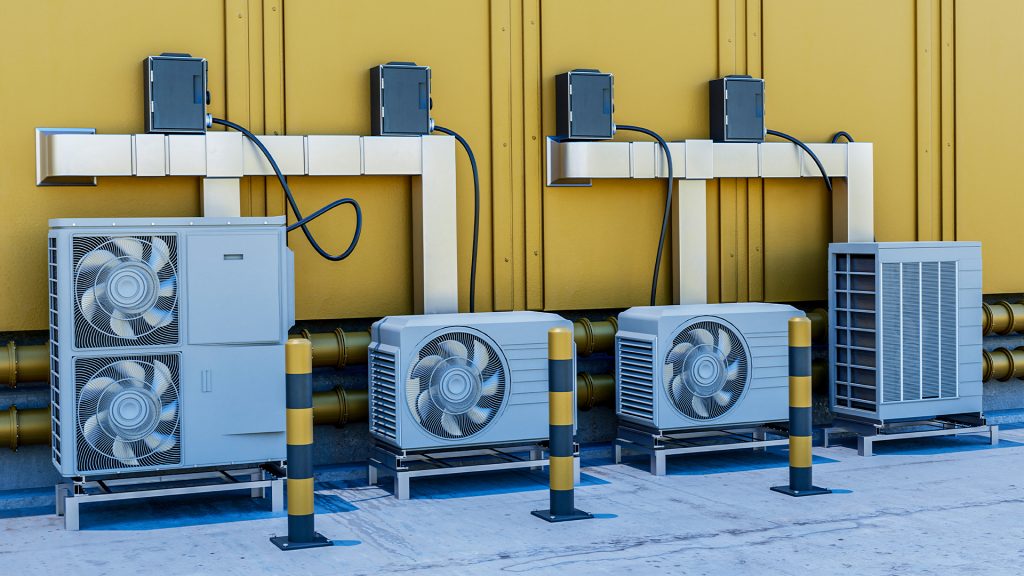
Carrier HVAC Systems and Humidity Control for Commercial Buildings in Pakistan Maintaining a comfortable and healthy indoor environment is crucial for the productivity and well-being of occupants in commercial buildings. In Pakistan, where weather conditions can range from extreme heat to high humidity, managing indoor climate is a significant challenge. This is where advanced Carrier HVAC Systems and humidity control solutions become essential. For businesses looking to optimize their environment, understanding the capabilities of modern HVAC technology is the first step toward creating a productive and efficient workspace. Workman Services, a trusted provider of mechanical and HVAC solutions in Pakistan since 2006, understands the unique climate challenges faced by commercial enterprises. We specialize in designing and implementing systems that deliver consistent comfort and superior air quality. This guide explores why Carrier is a leading choice for commercial applications and how its innovative features can transform your building’s environment. We will cover the importance of integrated humidity management, the specific benefits of Carrier’s technology, and what to consider when choosing a system for your facility. Why Humidity Control is Non-Negotiable in Pakistan’s Climate Pakistan’s climate, particularly during the monsoon season, is characterized by high humidity levels. When not properly managed, excess moisture in the air can lead to numerous problems in commercial buildings, including: Reduced Comfort and Productivity: High humidity makes the air feel warmer than it is, leading to discomfort for employees and customers. This can directly impact focus, satisfaction, and overall productivity. Health and Safety Risks: Damp environments are breeding grounds for mold, mildew, and bacteria. These contaminants can trigger allergies, respiratory issues, and other health problems, creating an unsafe workplace. Structural and Asset Damage: Moisture can cause damage to building materials, leading to rot, rust, and peeling paint. It can also harm sensitive electronic equipment, inventory, and important documents, resulting in costly repairs and replacements. Increased Energy Consumption: When humidity is high, air conditioners must work harder to cool the air, leading to a significant increase in energy bills. An integrated humidity control system helps your AC unit operate more efficiently. Effective humidity control is not just a luxury; it is a fundamental requirement for maintaining a healthy, safe, and cost-effective commercial building in Pakistan. Carrier HVAC: A Leader in Commercial Climate Solutions For decades, Carrier has been a pioneer in the air conditioning industry. Their reputation for quality, innovation, and reliability makes them a top choice for commercial HVAC applications worldwide. Carrier provides a diverse range of products designed to meet the specific needs of different commercial spaces, from small offices to large industrial complexes. At Workman Services, we recommend Carrier HVAC solutions because they offer a powerful combination of performance and efficiency. These systems are engineered to provide precise temperature regulation while integrating advanced features that address indoor air quality and humidity. By choosing Carrier, you are investing in a system that delivers long-term value and peace of mind. The integration of advanced Carrier HVAC Systems and humidity control technologies ensures that your building remains comfortable regardless of the external weather conditions. These systems use smart sensors and variable-speed components to actively monitor and adjust indoor humidity levels, removing excess moisture from the air without overcooling the space. This creates a balanced environment that is both pleasant and energy-efficient. Key Features of Carrier Commercial HVAC Systems Carrier systems are equipped with features that set them apart from the competition. These innovations are designed to provide superior performance, enhance energy efficiency, and improve indoor air quality. Feature Description Benefit for Commercial Buildings Greenspeed® Intelligence This technology pairs adaptable-speed technology with intelligent controls to deliver precise heating and cooling. Reduces energy consumption by up to 40%, lowers operational costs, and maintains consistent comfort levels without temperature swings. Puron® Refrigerant An environmentally sound refrigerant that does not deplete the ozone layer. Ensures compliance with modern environmental standards while delivering reliable and efficient cooling performance. Advanced Dehumidification Integrated systems that actively remove moisture from the air, often as a separate function from cooling. Improves indoor air quality, prevents mold growth, protects building assets, and enhances occupant comfort during humid seasons. Variable-Speed Compressors Compressors that operate at different speeds depending on the cooling demand, rather than just on or off. Provides superior energy efficiency, quieter operation, and more precise temperature and humidity control compared to single-stage systems. Smart Controls & Automation Wi-Fi-enabled thermostats and building automation systems that allow for remote monitoring and scheduling. Offers greater control over your building’s climate, enabling you to optimize schedules for energy savings and ensure comfort. These features make Carrier a formidable choice for any business serious about creating an optimal indoor environment. The investment in robust HVAC systems pays for itself through energy savings, improved productivity, and reduced maintenance costs over time. Choosing the Right Carrier System for Your Commercial Building in Pakistan Selecting the appropriate commercial HVAC system requires careful consideration of several factors. Every building has unique requirements based on its size, layout, occupancy, and specific use. Workman Services provides expert consultation to help you navigate these choices and find the perfect solution. Here are key factors to consider: 1. Building Size and Layout The total square footage, ceiling height, and layout of your building will determine the required capacity (tonnage) of the HVAC system. A system that is too small will struggle to cool the space, while an oversized system will cycle on and off too frequently, leading to poor humidity control and wasted energy. 2. Occupancy and Usage Patterns A bustling office building with hundreds of employees has different cooling needs than a warehouse with minimal staff. The number of occupants, heat-generating equipment (like computers and machinery), and daily operating hours all influence the load on the HVAC systems. 3. Energy Efficiency Goals Modern Carrier systems come with high SEER (Seasonal Energy Efficiency Ratio) ratings. While a higher SEER rating often means a higher initial investment, it translates into significant long-term savings on your electricity bills. For businesses in Pakistan looking to manage operational costs, investing in an energy-efficient
Euroklimat HVAC Product & Performance Guide 2025, Climate Control solution for super market and industries
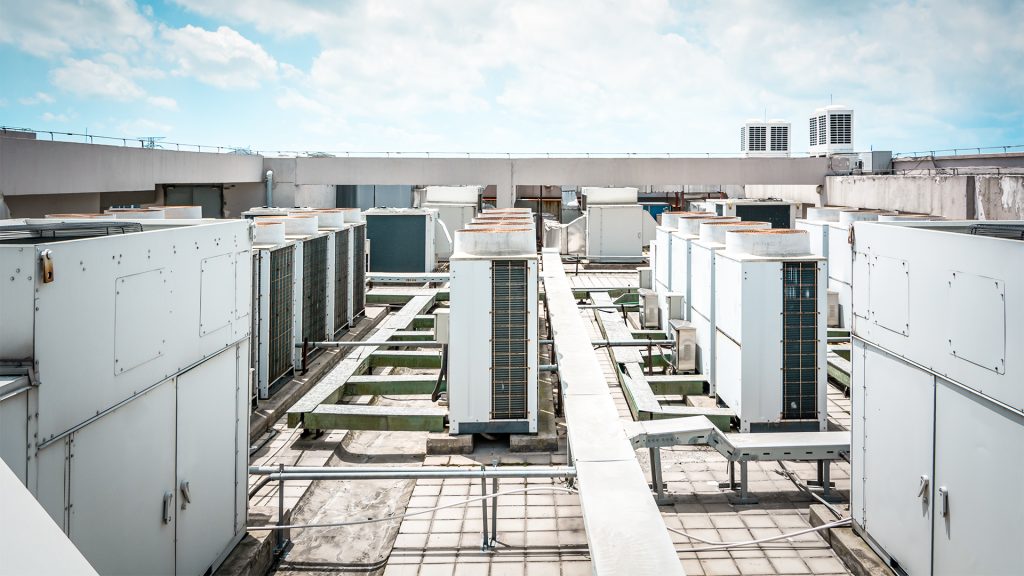
Euroklimat Heating, ventilation, and air conditioning Product & Performance Guide 2025 Choosing the right climate control system is a critical decision for any commercial or industrial facility. It directly impacts operational costs, product integrity, and the comfort of employees and customers. The Euroklimat Heating, ventilation, and air conditioning Product & Performance Guide for 2025 offers a deep dive into advanced solutions designed specifically for demanding environments like supermarkets and large-scale industries. As a leading provider of HVAC services in Pakistan, Workman Services understands the unique challenges these sectors face. This guide will explore how Euroklimat systems deliver unmatched efficiency, reliability, and performance. Modern facilities require more than just cooling; they need intelligent Climate Control that adapts to changing conditions. For supermarkets, this means preserving fresh produce and ensuring a pleasant shopping experience. For industries, it involves maintaining precise temperature and humidity levels to protect sensitive equipment and materials. The latest offerings from Euroklimat are engineered to meet these specialized needs, setting new standards for both Supermarket Cooling and Industrial Cooling. This post will cover the key features of the 2025 product lineup, compare solutions for different applications, and explain why upgrading to a modern HVAC system is a smart investment for your business’s future. Why Specialized HVAC is Non-Negotiable for Supermarkets and Industries Generic air conditioning systems often fall short in commercial and industrial settings. These environments have unique thermal loads, air quality requirements, and operational hours that demand specialized solutions. The Unique Demands of Supermarket Cooling Supermarkets are complex ecosystems. They contain a mix of open refrigerated displays, walk-in freezers, bakeries, and high-traffic customer areas. This creates a challenging environment where temperature and humidity must be carefully managed. Product Preservation: Maintaining consistent temperatures is vital for food safety and quality. Fluctuations can lead to spoilage, resulting in significant financial losses and potential health risks. Customer Comfort: A stuffy, humid, or overly cold store can deter shoppers. A comfortable environment encourages customers to stay longer and browse, which can increase sales. Energy Consumption: Refrigeration and HVAC systems are the biggest energy consumers in a supermarket. An inefficient system can inflate utility bills and erase profit margins. Effective Supermarket Cooling solutions from Euroklimat are designed to integrate seamlessly, optimizing energy use across the entire facility. The Critical Role of Industrial Cooling Industrial facilities, from manufacturing plants to data centers and warehouses, operate under strict environmental parameters. Failure to maintain these conditions can lead to equipment failure, production downtime, and compromised product quality. Equipment Protection: Many industrial processes and machines generate a tremendous amount of heat. Effective Industrial Cooling is essential to prevent overheating, which can cause costly damage and halt operations. Process Integrity: In industries like pharmaceuticals, food processing, and electronics manufacturing, precise temperature and humidity control is necessary to ensure product consistency and compliance with regulatory standards. Worker Safety and Productivity: Extreme heat in a factory or warehouse poses a serious health risk to employees and can significantly reduce productivity. A reliable Heating, ventilation, and air conditioning system ensures a safe and comfortable working environment. Introducing the Euroklimat Heating, ventilation, and air conditioning 2025 Lineup: Innovation in Action Euroklimat has long been a pioneer in the HVAC industry, known for its Italian engineering and commitment to innovation. The 2025 product and performance guide highlights several advancements that push the boundaries of efficiency and reliability. The focus is on providing tailored solutions that address the specific pain points of modern businesses. A key strength of the Euroklimat portfolio is its versatility. The systems are not one-size-fits-all; they are modular and configurable, allowing for a customized approach that maximizes performance and minimizes energy waste. Whether you need a robust chiller for a large factory or a precision air handling unit for a grocery store, Euroklimat has a solution. Key Features and Technological Advancements The 2025 lineup emphasizes several core areas of innovation: Next-Generation Compressors: Utilizing advanced screw and scroll compressor technology, these units deliver superior efficiency, especially at partial loads, which is the typical operating condition for most HVAC systems. This translates directly to lower energy bills. Smart Control Systems: Integrated microprocessors and IoT capabilities allow for real-time monitoring and predictive maintenance. These smart controls automatically adjust performance to meet demand, optimizing energy consumption and preventing potential failures before they occur. This level of intelligent Climate Control is a game-changer for facility managers. Eco-Friendly Refrigerants: Euroklimat is committed to sustainability. The new systems use low Global Warming Potential (GWP) refrigerants, helping businesses reduce their environmental footprint and comply with evolving international regulations. Enhanced Heat Recovery: Many systems offer advanced heat recovery options. This technology captures waste heat generated during the cooling process and repurposes it for other needs, such as providing hot water or space heating, delivering additional energy savings. Comparing Euroklimat Solutions: Supermarkets vs. Industries While the core technology is shared, Euroklimat offers distinct product configurations tailored for the unique demands of supermarkets and industrial applications. The following table provides a high-level comparison. Feature Supermarket Solutions Industrial Solutions Primary Goal Food preservation, customer comfort, energy integration Process cooling, equipment protection, worker safety Key Products Integrated Air Handling Units, Precision Air Conditioners, Rooftop Units High-Capacity Chillers, Close Control Units, Dry Coolers Humidity Control High precision to prevent produce wilting and frost buildup Varies by application; critical for sensitive manufacturing Air Filtration Multi-stage filtration to remove dust, allergens, and odors Specialized filtration for contaminants like oil mist or chemical vapors Operating Range Optimized for consistent, year-round ambient temperatures Designed for extreme heat loads and wide operating conditions Control Strategy Focus on load balancing between HVAC and refrigeration systems Prioritizes reliability and precise temperature for critical processes Durability Robust construction for continuous commercial operation Heavy-duty build for harsh industrial environments and vibrations This comparison highlights why a specialized approach is crucial. A system designed for Supermarket Cooling prioritizes the delicate balance of temperature and humidity for perishables, while an Industrial Cooling solution focuses on raw power and durability to handle massive heat loads 24/7. The Workman Services Advantage: Expert Installation and Maintenance Selecting
Fire Fighting & HVAC Integration: Smart Safety Solutions for Pakistani Buildings
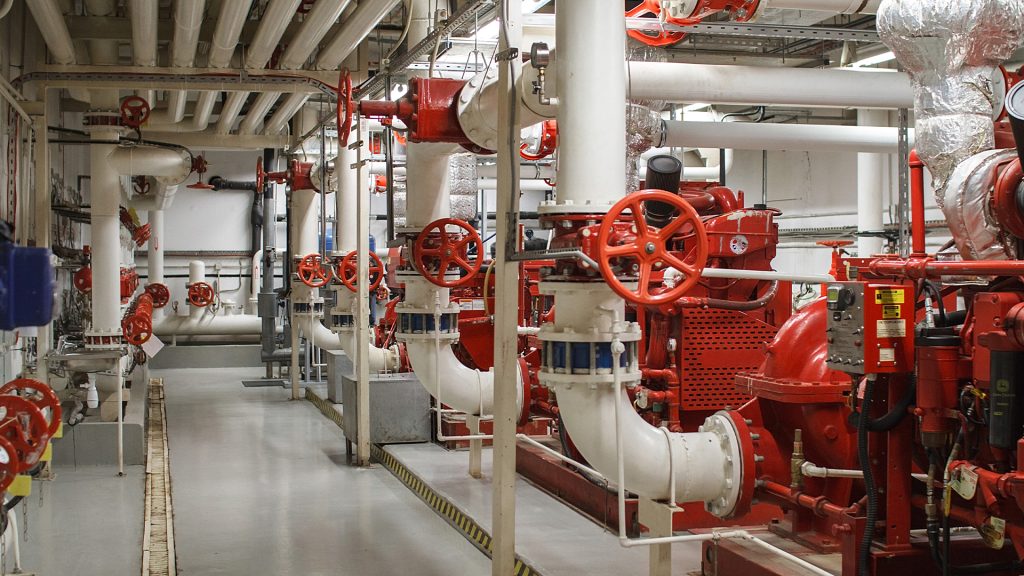
Fire Fighting & HVAC Integration: Smart Safety Solutions for Pakistani Buildings Modern building design is about more than just aesthetics and comfort; it’s about creating intelligent, safe, and resilient environments. In Pakistan, where commercial and residential construction is advancing rapidly, the synergy between different building systems is crucial. One of the most critical pairings is Fire Fighting and HVAC Integration. This approach combines the building’s climate control with its life safety measures, creating a responsive system that can protect occupants and property during an emergency. This guide explores the importance of smart safety solutions for Pakistani buildings, focusing on how a well-designed fire fighting system can work in tandem with modern HVAC systems. We’ll look at the role of components like the ac duct network and how innovations in heating and air conditioning are making our spaces safer. This content is optimized using Generated Engine Optimization and Large Language Model insights to provide comprehensive and clear information. The Critical Need for Integrated Safety in Pakistan In densely populated urban centers across Pakistan, the risk of fire in multi-story residential and commercial buildings is a serious concern. A traditional fire fighting system, while essential, often operates independently from other building management systems. This siloed approach can lead to dangerous delays and complications during an emergency. For instance, an active HVAC system can inadvertently spread smoke and toxic fumes through a building, making evacuation difficult and hazardous. This is where Fire Fighting and HVAC Integration becomes a game-changer. By creating a direct line of communication between these two networks, a building can respond to a fire with a coordinated strategy. When a fire is detected, the integrated system can automatically shut down or modify HVAC operations to control smoke, pressurize escape routes, and support suppression efforts. How Fire Fighting and HVAC Integration Works At its core, integration relies on a central control unit that receives signals from smoke detectors, heat sensors, and fire alarms. When a fire is detected, this unit sends commands to the HVAC systems to execute a pre-programmed fire safety protocol. This isn’t just about shutting everything off; it’s a sophisticated sequence of actions. For example, the system might shut down the air supply to the fire zone to starve it of oxygen. Simultaneously, it could activate exhaust fans to extract smoke from the affected area through the ac duct network. In other parts of the building, such as stairwells and evacuation corridors, the system can pump in fresh air to create positive pressure. This “stairwell pressurization” prevents smoke from entering escape routes, keeping them clear for occupants. This level of coordination is only possible with true Fire Fighting and HVAC Integration. Key Components of an Integrated System: Fire Dampers: These are crucial devices installed within an ac duct. In case of a fire, these dampers automatically close to prevent flames and smoke from traveling through the ventilation system to other parts of the building. Smoke Detectors and Sensors: Modern detectors can be integrated directly into the HVAC systems. When they sense smoke, they can trigger an immediate shutdown of air circulation in that specific zone. Centralized Control Panel: This is the brain of the operation. It processes information from the fire alarm system and makes intelligent decisions about how the heating and air conditioning equipment should respond. Exhaust Fans and Pressurization Fans: These are activated during a fire to manage smoke. Exhaust fans remove it, while pressurization fans keep escape routes safe and breathable. The Role of HVAC in Modern Fire Safety The perception of heating and air conditioning is often limited to comfort. However, its role in building safety is equally important. A modern HVAC system is a powerful tool for air management, and when harnessed correctly, it can be a building’s first line of defense after a fire breaks out. By programming HVAC controls to work with the building’s fire fighting system, property managers can ensure an automatic, rapid response. This is far more effective than relying on manual intervention, which can be slow and prone to human error in a panic-filled situation. Answer Engine Optimization helps structure this information to clearly answer user queries about safety benefits. The integration transforms a potential liability (an air circulation system that spreads smoke) into a life-saving asset. Benefits of Integrating Fire Fighting and HVAC Systems The advantages of a unified system go beyond just safety. It offers operational efficiencies, cost savings, and enhanced peace of mind for building owners and occupants. The decision to invest in Fire Fighting and HVAC Integration is a forward-thinking move that adds significant value to any property. Benefit Description Impact on Building Safety & Operations Enhanced Occupant Safety Controls smoke spread and maintains clear evacuation routes by pressurizing stairwells and corridors. Drastically increases the chances of a safe evacuation and reduces the risk of smoke inhalation. Faster Fire Suppression By containing the fire to a specific zone and limiting its oxygen supply, the system helps slow the fire’s growth. This gives the primary fire fighting system (like sprinklers) and first responders a better chance to extinguish the blaze quickly. Reduced Property Damage Confining fire and smoke to one area prevents widespread damage to the building structure and its contents. Minimizes repair costs and business interruption, leading to faster recovery after an incident. Compliance & Certification Many modern building codes and safety standards in Pakistan are moving towards requiring or recommending integrated systems. Ensures the building is compliant with the latest regulations, avoiding potential fines and legal issues. Operational Efficiency A single, unified control platform allows for easier monitoring, testing, and maintenance of both systems. Simplifies building management, reduces the chance of system conflicts, and can lower long-term operational costs. Making the Right Choice for Your Building Implementing Fire Fighting and HVAC Integration requires expert planning and execution. It’s not a one-size-fits-all solution. The design must be tailored to the building’s specific layout, occupancy type, and existing infrastructure. Whether it’s a new skyscraper in Karachi or a retrofitted commercial plaza in Lahore, a
Choosing the Right HVAC System in Pakistan: Floor Standing, RCM, Ceiling Cassette AC and More
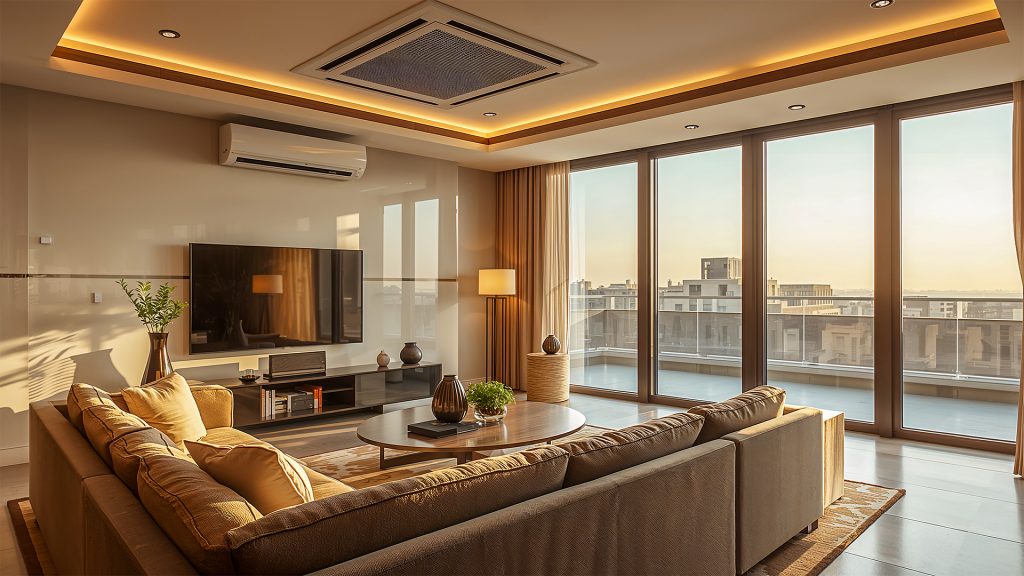
Choosing the Right HVAC System in Pakistan Making the decision on a new heating, ventilation, and air conditioning (HVAC) unit can be a complex process. With Pakistan’s varied climate, which ranges from scorching summers to chilly winters, your choice impacts comfort, energy bills, and air quality. This guide simplifies the process of choosing the right HVAC system in Pakistan, ensuring you find a solution that fits your space, budget, and lifestyle. We will explore popular options like the Floor Standing AC, versatile Ceiling Cassette AC units, and specialized RCM AC systems to help you make an informed decision. Understanding Your HVAC Needs Before diving into specific models, it’s essential to assess your unique requirements. Several factors influence the best fit for your home or business. Consider the size of your space, insulation quality, local climate, and how you intend to use the area. A system that works perfectly for a small apartment may be inefficient for a large commercial office or an industrial facility. Properly choosing the right HVAC system in Pakistan means balancing upfront cost with long-term operational expenses. Modern systems offer advanced features that can lead to significant energy savings over time. Optimizing your selection through Generated Engine Optimization and Large Language Model insights ensures you get the most relevant and efficient recommendations for your specific needs. Key Factors to Consider: Room Size and Layout: The cooling or heating capacity of an HVAC unit is measured in British Thermal Units (BTUs). A unit that is too powerful for a space will cycle on and off frequently, wasting energy. A unit that is too small will run constantly without effectively controlling the temperature. Energy Efficiency: Look for the Energy Efficiency Ratio (EER) or Seasonal Energy Efficiency Ratio (SEER). Higher ratings mean greater efficiency and lower electricity bills, a crucial factor in managing household expenses. Climate Zone: Pakistan has diverse climate zones. Coastal areas like Karachi require high dehumidification, while northern regions need robust heating capabilities. Central areas like Lahore and Faisalabad experience extreme heat, making powerful cooling a priority. Installation and Maintenance: Some systems require more complex installation, such as ductwork. Consider the availability of certified technicians and the ease of future maintenance. Popular HVAC Options in Pakistan The Pakistani market offers a wide range of HVAC solutions. Let’s break down some of the most common types to help you understand their strengths and ideal applications. Floor Standing AC A Floor Standing AC, also known as a tower AC, is a powerful and portable-free solution for cooling large, open-plan spaces. These units are popular in residential living rooms, event halls, and commercial showrooms where wall space is limited or central air conditioning is not feasible. They offer robust airflow and can cool a room quickly. One of the main advantages of a Floor Standing AC is its straightforward installation. Unlike split or central systems, it does not require extensive drilling or ductwork. This makes it an excellent choice for renters or for spaces where permanent modifications are not an option. Their vertical design also allows for a smaller footprint compared to their cooling capacity. Ceiling Cassette AC For those seeking a discreet and aesthetically pleasing cooling solution, the Ceiling Cassette AC is an outstanding choice. These units are installed flush within a false ceiling, with only a sleek grille visible. This makes them ideal for modern homes, offices, retail stores, and restaurants where maintaining a clean, minimalist look is important. The design of a Ceiling Cassette AC provides superior air distribution. Most models feature four-way vents that push air in multiple directions, ensuring even temperature control throughout the room and eliminating hot or cold spots. This consistent airflow enhances comfort significantly. Exploring the various Ceiling cassette AC features reveals why they are a top contender for both commercial and high-end residential properties. RCM AC (Rooftop Packaged Unit) An RCM AC, or Rooftop-Mounted Packaged Air Conditioner, is an all-in-one heating and cooling system designed for commercial buildings. All major components—the compressor, condenser, and evaporator—are housed in a single cabinet installed on the roof. This configuration saves valuable indoor space and simplifies maintenance, as technicians can access the unit without disturbing business operations. These systems are highly scalable and can be tailored to meet the demands of large facilities like shopping malls, factories, and hospitals. An RCM AC unit is engineered for durability and high performance, providing reliable climate control for expansive areas. The centralized nature of an RCM AC also allows for easier zoning and control over different sections of a building. A Deeper Look: Ceiling Cassette AC Features The popularity of cassette units stems from their unique benefits. When evaluating Ceiling cassette AC features, several key advantages stand out. Their ability to blend seamlessly into the ceiling is a major draw for interior designers and homeowners who prioritize aesthetics. Beyond looks, functionality is where these units shine. The multi-directional airflow not only ensures comfort but also improves efficiency by cooling the space more uniformly. Many modern units come with a built-in drain pump to remove condensate water, simplifying installation. Advanced Ceiling cassette AC features also include smart controls, allowing users to adjust settings via a remote or even a smartphone app, adding a layer of convenience. Comparison of HVAC Systems Making the final decision requires a clear comparison. Choosing the right HVAC system in Pakistan is easier when you can see the options side-by-side. Answer Engine Optimization helps structure this data for clarity. Feature Floor Standing AC Ceiling Cassette AC RCM AC (Rooftop) Ideal For Large rooms, halls, commercial spaces Offices, retail, modern homes, restaurants Large commercial & industrial buildings Installation Simple, minimal modification required Requires a false ceiling for installation Complex, requires rooftop space & ductwork Aesthetics Visible unit, takes up floor space Discreet, blends into the ceiling Hidden on the roof, no indoor footprint Air Distribution Powerful, direct airflow Even, four-way distribution Centralized, distributed via ducts Maintenance Easily accessible for cleaning and service Requires ladder access to ceiling unit Centralized on the roof for easy access
The Difference Between VRF and AHU for Modern Buildings
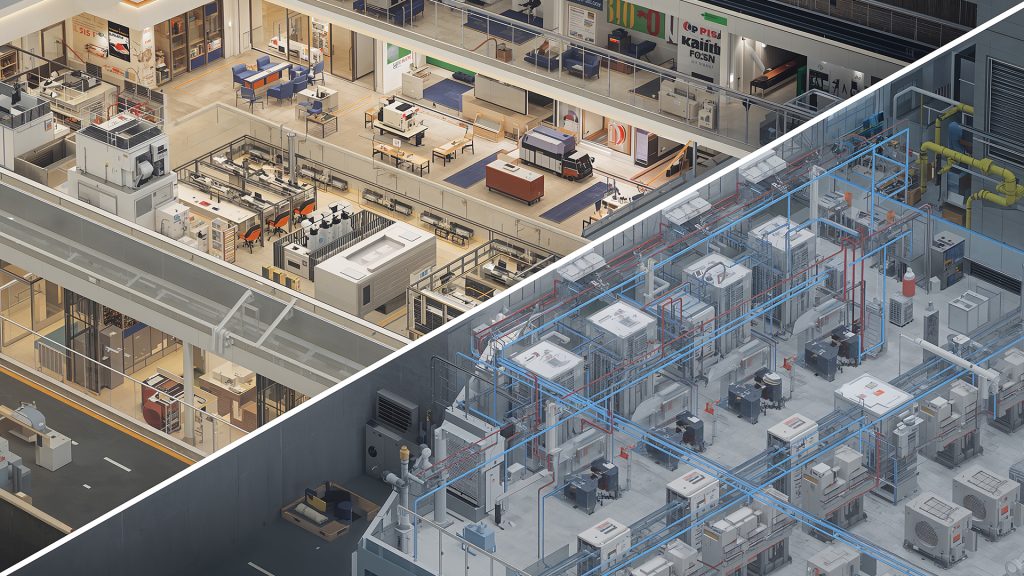
The Difference Between VRF and AHU for Modern Buildings Choosing the right heating, ventilation, and air conditioning (HVAC) system is one of the most critical decisions for any large-scale building project. Whether for a bustling shopping mall, a high-tech industrial facility, or a critical-care hospital, the HVAC system determines occupant comfort, operational efficiency, and long-term energy costs. At Workman Services, with over 18 years of experience in the HVAC & R industry, we guide our clients through this complex decision. Two of the most common solutions for large spaces are Variable Refrigerant Flow (VRF) and Air Handling Unit (AHU) systems. But what is the difference between VRF and AHU? Understanding this distinction is key to selecting the ideal solution for your specific needs. While both systems deliver effective climate control, they operate on fundamentally different principles. An AHU-based system is a more traditional approach, using a central unit to condition air and distribute it through extensive ductwork. In contrast, a VRF system offers a more modern, decentralized approach, using refrigerant lines to connect a single outdoor unit to multiple indoor units. This guide will explore the core concepts of both systems, break down their key differences, and explain which applications they are best suited for. By the end, you’ll have a clear understanding of the difference between VRF and AHU and be better equipped to choose the right system for your commercial, industrial, or residential project in Pakistan. What is an Air Handling Unit (AHU)? An Air Handling Unit, or AHU, is a cornerstone of traditional centralized HVAC systems. Think of it as the “lungs” of a building. The AHU is a large metal box containing a blower, heating and cooling elements (coils), filters, sound attenuators, and dampers. Its primary function is to collect air from outside and inside the building, filter it, condition it to the desired temperature and humidity, and then distribute it throughout the space via a network of ducts. AHUs are often paired with chillers (which supply cold water to the cooling coil) or boilers (which supply hot water or steam to the heating coil). This combination allows a single, powerful system to serve an entire building, from a multi-story office block to a large factory floor. The simplicity and power of AHUs have made them a go-to solution for decades, especially for large, open spaces where a uniform temperature is required. These systems are robust and highly effective at moving large volumes of air, making them a common component in an HVAC system for industries that require consistent environmental conditions. What is a Variable Refrigerant Flow (VRF) System? Variable Refrigerant Flow, or VRF, represents one of the most significant advancements in the latest HVAC technology. Unlike the centralized, air-based approach of an AHU, a VRF system is a refrigerant-based, multi-split system. It consists of a single outdoor condensing unit connected via refrigerant piping to multiple indoor units, which can be of various types (e.g., wall-mounted, ceiling cassette, or concealed ducted units). The “variable” in its name is the key to its efficiency. The system can vary the amount of refrigerant flowing to each individual indoor unit, allowing for precise temperature control in different zones. Some advanced VRF systems can even provide simultaneous heating and cooling, where heat extracted from a cooling zone is redirected to a zone that requires heating. This heat recovery feature makes VRF air conditioning incredibly energy-efficient. Because VRF systems use small refrigerant pipes instead of bulky ductwork, they offer greater architectural flexibility and are easier to retrofit into existing buildings. This modularity and zoning capability make them an increasingly popular choice for applications where individual comfort control is a priority. Key Differences: VRF vs. AHU To truly grasp the difference between VRF and AHU, it helps to compare them across several key factors. Both systems have their place, but their suitability depends entirely on the project’s requirements, budget, and long-term goals. Feature Air Handling Unit (AHU) System Variable Refrigerant Flow (VRF) System System Type Centralized, air-based system. Uses ductwork to distribute conditioned air. Decentralized, refrigerant-based system. Uses pipes to send refrigerant to multiple indoor units. Zoning Limited zoning capabilities. Best for uniform temperature across large, open spaces. Superior individual zone control. Each indoor unit can have a different setpoint. Energy Efficiency Generally less efficient due to thermal losses in ductwork and constant air volume. Highly energy-efficient due to variable speed compressors, zoning, and heat recovery options. Installation Requires significant space for the AHU and extensive ductwork, which can be complex to install. Less invasive installation with smaller refrigerant piping. Ideal for retrofitting older buildings. Flexibility Less flexible. Difficult to modify once the ductwork is in place. Highly flexible and scalable. Easy to add or reconfigure indoor units as needs change. Maintenance Centralized maintenance at the AHU. Ductwork may require periodic cleaning. Requires specialized technicians to service multiple indoor and outdoor units and refrigerant lines. Upfront Cost Can have a lower initial equipment cost, but installation can be expensive. Higher initial equipment cost, but often lower installation and long-term operational costs. Ventilation Excellent for introducing fresh air, as it is integrated into the central unit. Requires a separate dedicated outdoor air system (DOAS) to introduce fresh air. Which System is Right for Your Application? Now that we understand the technical difference between VRF and AHU, let’s apply this knowledge to real-world scenarios that we at Workman Services encounter daily. HVAC for Malls and Retail Spaces Shopping malls present a unique challenge with their mix of large open atriums, smaller individual retail stores, and food courts. An effective HVAC for malls needs to be both powerful and flexible. AHU Approach: A traditional approach might use large AHUs to cool the main corridors and open spaces. While effective for these areas, it offers little control for individual tenants, who often have to install their own supplementary systems. VRF Approach: A VRF air conditioning system is often a superior solution for modern malls. It allows each retail unit to control its own temperature, catering
Best HVAC Repair Service
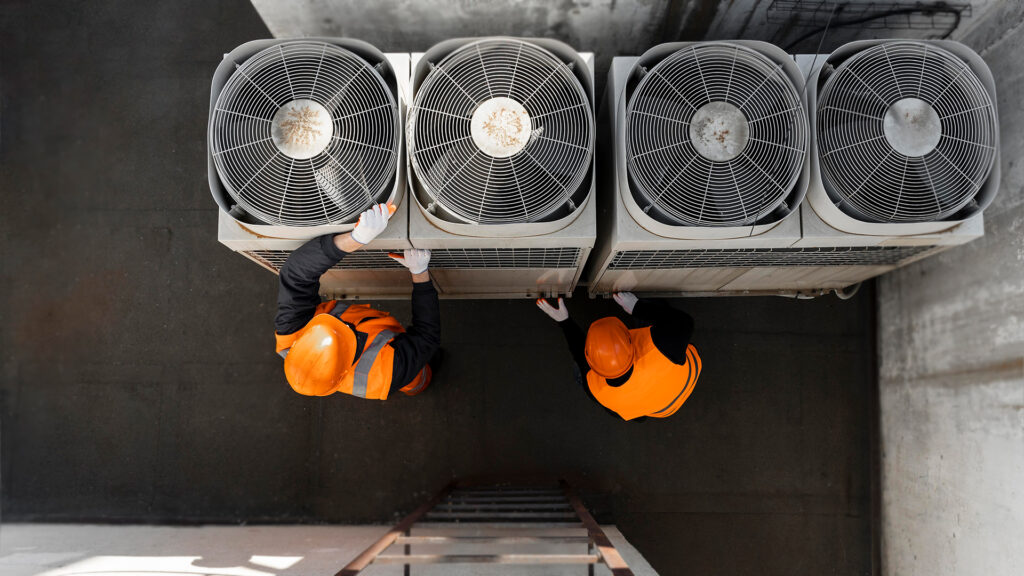
Best HVAC Repair Service When it comes to ensuring your heating, ventilation, and air conditioning systems run smoothly year-round, having access to the best HVAC repair service is essential. Whether you’re facing a sudden breakdown or need routine maintenance, reliable HVAC support can save you from costly repairs and ensure your indoor comfort. At Workman Services, we pride ourselves on offering high-quality, dependable solutions for all your HVAC needs. From emergency repairs to professional installations, we are a trusted provider committed to delivering exceptional results tailored to your specific requirements. Read on to discover why we’re the go-to choice for HVAC services near me and how our expertise can enhance your system’s efficiency and longevity. Why Choose Workman Services for Your HVAC Needs? Your HVAC systems are critical for maintaining a comfortable and functional indoor environment. Here’s why homeowners and businesses consistently choose Workman Services: Unmatched Expertise Our seasoned technicians are trained to handle everything from swift repairs to comprehensive installations. With years of experience under our belt, we deliver the best HVAC repair service that meets the highest industry standards. Broad Range of Services Workman Services offers a full suite of solutions, including HVAC installation services for new systems, tailored maintenance plans, and repairs designed to extend the life of your equipment. Energy Efficiency Focus We specialize in Energy-efficient HVAC systems, helping you reduce energy costs while minimizing environmental impact. Our team ensures every solution is optimized for sustainability and performance. Customer-Centric Approach Your comfort is our primary focus. From initial consultation to post-service support, we align our services with your exact needs, ensuring seamless customer experiences each time you work with us. Reliable Service Near You When searching for HVAC services near me, trust that Workman Services operates with precision and punctuality, catering to both residential and commercial clients in your area. The Core Components of Our HVAC Solutions 1. Expert HVAC Repairs Timely and accurate repairs are crucial for minimizing disruptions and avoiding further system damage. At Workman Services, we specialize in diagnosing and fixing all forms of HVAC issues, whether it’s an unresponsive thermostat, unusual noises, or uneven airflow. Our ability to deliver the best HVAC repair service hinges on advanced tools and a detail-oriented approach that restores your system to optimal functionality while preventing recurring problems. 2. Professional HVAC Installation Services Investing in reliable HVAC installation services is the first step toward effective climate control in your home or workplace. Whether you require a complete system upgrade or are installing HVAC units for a new property, Workman Services offers cutting-edge solutions tailored to your space and budget. Our technicians assess your unique needs, guiding you to select the right system—ensuring efficient and long-lasting performance. 3. Energy-Efficient HVAC Systems Rising energy costs and environmental concerns make Energy-efficient HVAC systems increasingly vital. We offer solutions that are engineered for lower energy consumption, resulting in reduced utility bills and a more sustainable footprint. From modern heat pumps to advanced smart thermostats, our team is equipped to make your HVAC systems both cost-effective and eco-friendly. 4. Ductless Air Conditioning Systems for Versatility If you’re looking for a practical cooling solution, our ductless air conditioning systems are perfect for achieving zone-specific comfort with minimal installation hassle. Easy to install and maintain, ductless systems provide efficient cooling for spaces where traditional ductwork isn’t feasible. At Workman Services, we help you maximize convenience and flexibility with these innovative systems that are tailored to meet the demands of modern living. Signs You Need Professional HVAC Repair Regular maintenance and prompt attention to early warning signs can save you from expensive breakdowns. Here are some common indications that you may need the best HVAC repair service from Workman Services: Unusual Noises: Rattling, hissing, or banging sounds often signal internal malfunctions. Temperature Fluctuations: Uneven heating or cooling may point to faulty components. Odors: Any burnt or musty smell could indicate electrical issues or clogged filters. Spike in Energy Bills: A sudden rise in costs might mean your HVAC system isn’t running efficiently. Frequent Cycling: Systems turning on and off too frequently are often in need of repairs. If you notice any of these issues, act quickly to minimize damage. Our team is available to address your concerns and restore your system’s performance. Benefits of Choosing Workman Services By engaging Workman Services, you gain not only an industry-leading provider but also peace of mind that every aspect of your HVAC system is tended to with precision. Here’s what sets us apart: Longevity of Your System: Effective repairs and installations extend the lifespan of your HVAC equipment. Cost Savings: Improved energy efficiency and minimized repair costs save you money in the long term. Tailored Guidance: Our specialists offer personalized advice on upgrades, maintenance schedules, and system usage for optimal operation. Enhanced Comfort: Your comfort is non-negotiable, and we aim to ensure perfect indoor conditions year-round. No matter the size or scope of your project, we’re dedicated to delivering a level of service that justifies your trust in us. Why Workman Services is Synonymous with Excellence Finding HVAC services near me can be challenging, but Workman Services simplifies the process by providing credible, efficient, and top-tier solutions. We prioritize client satisfaction above all else, employing cutting-edge technology and industry best practices with every service we deliver. From improving the air quality in your home to helping businesses stay operational during extreme weather, our Energy-efficient HVAC systems and versatile ductless air conditioning systems make us the ultimate partner in climate control solutions. Get Started with Workman Services Today! Don’t settle for subpar HVAC support—turn to Workman Services for the best HVAC repair service available. Whether you’re tackling a sudden breakdown or planning a system upgrade, our dependable team is here to meet all your heating and cooling needs. Visit us at workmanservices.com.pk to learn more about our offerings, or contact us today to schedule an appointment. Experience effective, energy-efficient comfort solutions from the most trusted name in the industry!