Ducting Work Explained: Your Complete Guide to Better Airflow

Ducting Work Explained: Your Complete Guide to Better Airflow Ever wondered why some buildings feel perfectly cool in every corner while others have hot spots and stuffy rooms? The secret often hides above your ceiling! Great airflow starts with quality ducting Work, and that’s exactly what we at Workman Services have been perfecting since 2006. Whether you own a cozy apartment, run a bustling office, or manage a large hospital, the ductwork inside your building plays a huge role in comfort, energy bills, and air quality. Let’s walk through everything you need to know, in plain and simple terms! Why Quality Ducting Work Matters So Much Think of ducts as the veins of your HVAC system. They carry cooled or heated air from your equipment to every room. When these channels are well designed and properly sealed, air flows smoothly and efficiently. When they’re not, you waste energy and money every single month. Poorly installed ducts can leak up to 30% of your conditioned air. That’s like paying for cooling that simply escapes into walls and ceilings! Good ductwork keeps that air where it belongs, saving you cash and boosting comfort. Here’s what strong ducting brings to your space: Even temperatures in every room Lower electricity bills Cleaner, healthier indoor air Quieter operation Longer life for your HVAC equipment At Workman Services, we handle design, supply, installation, testing, commissioning, and maintenance. It’s a full package, so you never have to juggle multiple contractors! The Main Types of Ducts You Should Know Not all ducts are created equal. Choosing the right one depends on your building, your budget, and your goals. Let’s explore the popular options together. Sheet Metal Ducts for Strength and Durability When you want ducts that last for decades, Sheet Metal Ducts are a top choice. Made from galvanized steel or aluminum, they resist rust and hold up well under pressure. They’re smooth on the inside too, which means air moves freely with less resistance. We love recommending Sheet Metal Ducts for large commercial buildings, hospitals, and industrial units where durability really counts. They’re also easy to clean, making them a smart pick for spaces that need excellent air quality. Because they don’t trap moisture, Sheet Metal Ducts also help reduce the risk of mold growth over time. Flexible Ducts for Tricky Spaces Sometimes a building has tight corners, odd angles, or hard-to-reach spots. That’s where Flexible Ducts shine! These bendable tubes make installation quick and simple in spaces where rigid ducts just won’t fit. Flexible Ducts work beautifully for connecting main duct lines to individual vents and registers. They’re lighter and faster to install, which can lower your labor costs. Just remember, they need proper support to avoid sagging. Our technicians make sure your Flexible Ducts are installed with the right tension and spacing for peak performance. Fiberglass Duct Board for Built-In Insulation Looking for ducts that keep air at the right temperature while cutting down noise? Fiberglass Duct Board could be your answer! This material comes with insulation built right in, so your air stays cool as it travels. Fiberglass Duct Board is fantastic for offices and quiet spaces because it absorbs sound wonderfully. It also fights condensation, which helps protect your building from moisture damage. Many of our clients choose Fiberglass Duct Board when both energy savings and a peaceful environment matter most. Pre Insulated Ducts for Smart Efficiency Want the best of speed and insulation in one neat package? Pre Insulated ducts are made from insulated panels that get cut and assembled on site. They’re lightweight, energy efficient, and quick to install. Pre Insulated systems reduce heat loss and keep your energy costs low. They’re a modern favorite for commercial buildings and luxury villas. Because Pre Insulated ducts arrive ready with insulation, projects finish faster with less mess. That’s a win for busy sites where time truly is money! Comparing Duct Types Side by Side Still deciding which option fits your project? This handy table breaks down the key differences so you can choose with confidence. Duct Type Best For Durability Insulation Installation Speed Noise Control Sheet Metal Ducts Hospitals, industrial, commercial Very high Needs added wrap Moderate Good Flexible Ducts Tight spaces, vent connections Moderate Some options insulated Fast Moderate Fiberglass Duct Board Offices, quiet zones Good Built-in Moderate Excellent Pre Insulated Villas, modern commercial High Built-in Very fast Very good Each type has its own strengths. Our team helps you weigh these factors against your budget and building needs, so you always land on the perfect fit! How We Approach Ducting Work at Workman Services Every great project starts with a solid plan. Here’s how our proven process keeps your ducting Work smooth from start to finish. Step-by-Step Ducting Work Process Site assessment — We visit your space and study its layout, size, and airflow needs. Custom design — Our engineers create a duct plan tailored to your exact requirements. Material selection — Together we pick the right duct type for your goals and budget. Professional installation — Our certified technicians install everything with care and precision. Testing and commissioning — We check for leaks and confirm airflow is spot on. Ongoing maintenance — We keep your system running strong for years to come. This careful approach is why so many homes, offices, and hospitals across Lahore, Rawalpindi, Faisalabad, and even the UAE trust us with their comfort! Tips to Get the Most From Your Ductwork Want your ducts to perform their best? Try these simple, practical tips: Seal every joint. Proper sealing stops costly air leaks. Insulate where needed. This protects air temperature in unconditioned areas. Keep runs short and straight. Fewer bends mean smoother airflow. Schedule regular cleaning. Clean ducts mean healthier air and better efficiency. Choose the right size. Ducts that are too big or too small waste energy. A little care goes a long way toward saving money and keeping your air fresh! Choosing the Right Partner for Your Project Quality ducting Work isn’t just about materials.
Air Ducting for Commercial and Industrial Projects: A Practical Guide
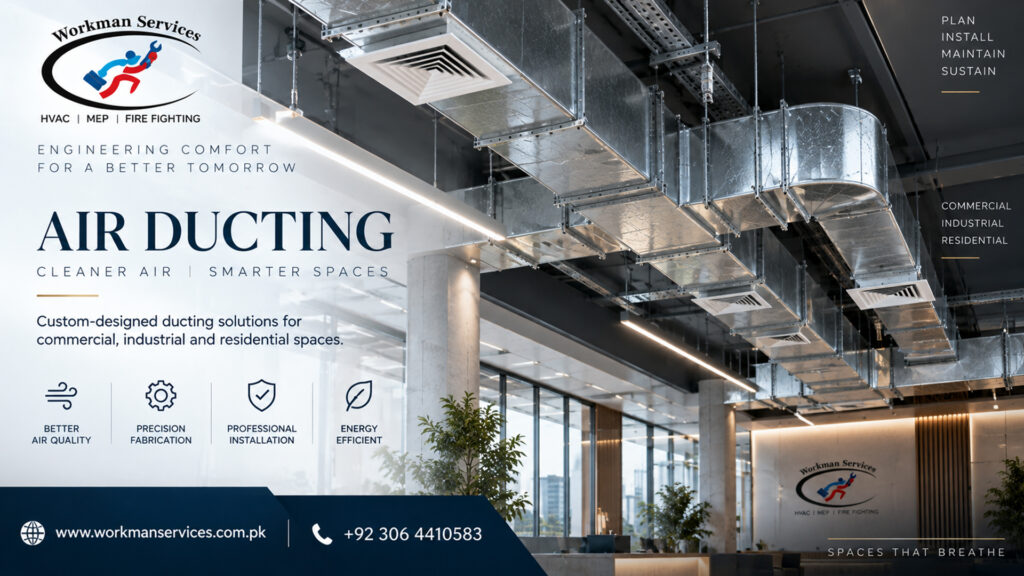
Air Ducting Solutions for Commercial and Industrial Projects: A Practical Guide Efficient cooling starts with smart, well-built ducts. Clean, sealed, and correctly sized channels move fresh, cool air through every corner of your facility. If you manage a factory, office, hospital, or retail space in Pakistan, this guide will help you plan your next project with confidence. Here you’ll learn what air ducting really means, the main types available, how the installation process works, and the questions business buyers ask most. Since 2006, Workman Services has been one of Pakistan’s most trusted providers of HVAC&R and fire fighting solutions across Lahore, Rawalpindi, Faisalabad, and the UAE. Ducts sit right at the heart of every one of those projects. What Is Air Ducting and Why It Matters Air ducting is the system of channels that carries cooled, heated, or fresh air from your HVAC equipment to the spaces that need it. Think of it as the circulatory system of your building. Air travels from your chillers, AHUs, or VRF units and reaches every room evenly and efficiently. Well-designed ducts deliver consistent temperatures, cleaner air, and lower energy bills. Poor ductwork leaks air, wastes power, and creates uncomfortable hot spots. The difference comes down to design quality, proper sealing, and selecting the right materials for your environment. For hospitals, factories, and busy offices, reliable air ducting is essential. It protects people, products, and processes every day. That’s why experienced facility managers across Pakistan rely on Workman Services to get it right the first time. The Real Benefits of Quality Air Ducting Strong air ducting keeps your running costs low and your air quality high. Leaky or undersized channels force your HVAC equipment to work harder, shortening its life and inflating your energy bills. Here’s what a properly built system delivers: Even cooling across every floor and room Cleaner, healthier air for staff, patients, and visitors Lower energy costs through minimized air loss Quieter operation with reduced vibration and noise Longer equipment life through balanced airflow That last point is especially important for large facilities. Balanced airflow eases the load on your ducted aircon system, so it performs reliably for years. Workman Services designs every system with that long-term efficiency in mind. Main Types of Ductwork for Commercial Spaces Different projects call for different duct designs. The right choice depends on your building size, airflow volume, and the specific environment inside. Here’s a straightforward breakdown of the most common options. Rigid Sheet Metal Ducts Galvanized steel and aluminum ducts are the foundation of commercial ductwork. They’re strong, durable, and resistant to corrosion in demanding conditions. These rectangular or round channels are ideally suited to factories, warehouses, and large retail buildings. Workman Services fabricates sheet metal ducts in-house to ensure a precise fit for every project. Insulated and Flexible Ducts Flexible ducts navigate tight corners and awkward spaces with ease. Insulated versions reduce heat loss and prevent condensation. They work well for connecting a main ac duct line to individual outlets in offices and showrooms, offering both convenience and performance. Fabric and Textile Ducts Fabric ducts distribute air gently and evenly, without harsh drafts. They’re lightweight, easy to clean, and well-suited to hygienic environments like food processing units and clean rooms. Each type of ductwork has its own strengths, and the best systems often combine two or more to suit the space perfectly. How the Air Ducting Process Works A great result starts with a clear, structured process. Here’s how a professional air ducting project comes together from the first site visit to final handover with Workman Services. Stage What Happens Why It Matters Survey & Assessment Site visit, airflow requirements, and space measurements Ensures the right duct size and layout for your facility Design & Planning CAD drawings and load calculations Balances airflow and maximizes energy efficiency Fabrication Ducts cut and shaped to specification Delivers a precise, custom fit every time Installation Ducts fitted, sealed, and properly supported Prevents air leaks and minimizes vibration Testing & Commissioning Airflow balanced and verified Confirms even, efficient performance throughout Maintenance Scheduled cleaning and inspections Keeps the system performing at its best long term This structured workflow keeps every project on time and on budget. It’s the same disciplined approach Workman Services applies across all its branches, from Lahore to Abu Dhabi, and it’s a big part of why clients come back project after project. Choosing the Right Air Ducting Partner The best duct systems come from experienced, well-organized teams. Look for a provider with qualified designers, skilled fabricators, and certified technicians who understand your sector’s specific demands, whether that’s hospitals, factories, offices, or retail. A strong partner manages the full journey: design, supply, installation, testing, and ongoing maintenance. That single point of accountability protects your budget and your timeline. It also means one team takes full responsibility for your air conditioning ductwork system, from concept through to commissioning. Workman Services has built that reputation since 2006. With branches in Lahore, Rawalpindi, and Faisalabad, and a presence in the UAE, the company brings both local knowledge and broad project experience to every engagement. Common Ducting Mistakes and How to Fix Them Even high-quality HVAC equipment underperforms when ductwork basics are overlooked. If you’re experiencing uneven cooling or unexpectedly high energy bills, one of these issues is likely the cause. Wrong duct size: Undersized channels restrict airflow and strain your system. Resolve this with accurate load calculations before installation begins. Air leaks: Poor sealing wastes cooled air and raises costs. Fix this with quality sealants and pressure testing after installation. Missing insulation: Uninsulated ducts lose energy and cause condensation. Insulate all runs through unconditioned or high-temperature areas. Poor layout: Too many sharp bends slow airflow and increase noise. Plan smooth, direct routing from the start. Skipped maintenance: Dust buildup reduces air quality and system efficiency. Schedule regular professional cleaning and inspections. Avoiding these mistakes is something Workman Services prioritizes on every project. Their engineers plan, install, and verify each system so these problems never reach the client.
Industrial Duct Working: A Practical Guide to Better Airflow and Comfort
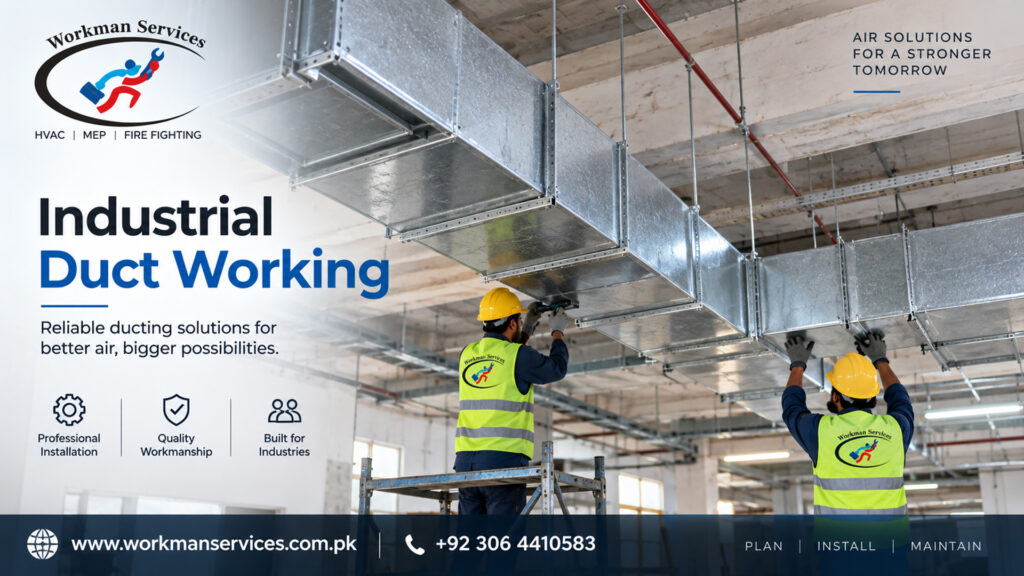
Industrial Duct Working: A Practical Guide to Better Airflow and Comfort Efficient air distribution begins with well-built ductwork. Clean, properly sealed ducts keep your factory, hospital, or office cool, fresh, and comfortable throughout the year. If you manage a large facility in Pakistan, this guide will walk you through everything you need to make the right decision. You’ll learn what industrial duct working involves, why it matters, and how to choose the right system for your space. We’ll cover the main duct types, the installation process, common mistakes, and the questions facility managers ask most often. Since 2006, Workman Services has delivered reliable HVAC&R and fire fighting solutions across residential, commercial, industrial, hospital, office, and retail projects. Ductwork is central to almost every project we handle. What Is Industrial Duct Working? Industrial duct working is the design, fabrication, and installation of metal or composite channels that move air through a building. These ducts carry cooled air, fresh air, and exhaust to exactly where it’s needed. When done correctly, they deliver even temperatures, better air quality, and noticeably lower energy bills. Think of ducting as the circulatory system of your HVAC setup. Air travels from your chillers, AHUs, or VRF units through the duct network and reaches every corner of your facility. Poorly built or leaking ducts waste energy and create uncomfortable hot spots. Well-designed ducting is sealed, insulated, and sized to match your actual airflow requirements. Getting that right is the foundation of consistent comfort in any large space. Why Industrial Duct Working Matters for Your Facility Properly designed industrial duct working keeps running costs down and air quality up. When ducts leak or are undersized, your equipment works harder than it should — shortening its service life and increasing your bills. Here’s what quality ductwork delivers: Even cooling across every room and floor Cleaner, healthier air for staff and visitors Lower running costs through reduced air loss Quieter operation with less vibration and noise Longer equipment life through balanced airflow For hospitals and manufacturing units, reliable air ducting is especially critical. It protects people, products, and processes around the clock. Main Types of Industrial Ducting Different projects call for different duct designs. The right choice depends on your building size, airflow volume, and the conditions inside the space. Here’s a straightforward look at the most common options. Rigid Sheet Metal Ducts Galvanized steel and aluminum ducts are the standard choice for industrial ducting. They’re strong, long-lasting, and hold up well against corrosion in demanding environments. Rectangular or round sheet metal ducts are well suited to factories, warehouses, and large commercial buildings. Insulated and Flexible Ducts Flexible ducts can bend around tight corners and fit into spaces where rigid ducts can’t reach. Insulated versions reduce heat gain and prevent condensation. They’re commonly used to connect main duct runs to individual air outlets in offices and retail spaces. Fabric and Textile Ducts Fabric ducts distribute air evenly across a wide area with minimal drafts. They’re lightweight, straightforward to clean, and a practical choice for hygiene-sensitive environments like food processing units and clean rooms. How the Industrial Duct Working Process Works Reliable results come from a structured process. Here’s how professional air ducting projects move from start to finish. Stage What Happens Why It Matters Survey & Assessment Site visit, airflow analysis, and measurements Ensures the correct duct sizing and layout Design & Planning CAD drawings and load calculations Balances airflow and energy efficiency Fabrication Ducts cut and shaped to specification Delivers a precise, custom fit Installation Ducts fitted, sealed, and supported Prevents leaks and reduces vibration Testing & Commissioning Airflow balanced and performance checked Confirms even, efficient distribution Maintenance Scheduled cleaning and inspections Keeps the system performing over time This process — from survey through to commissioning — is the same structured approach Workman Services follows across projects in Lahore, Rawalpindi, Faisalabad, and the UAE. Choosing the Right Partner for Industrial Duct Working Strong duct systems are built by experienced teams. When evaluating a provider, look for qualified designers, skilled fabricators, and technicians with hands-on project experience in your sector — whether that’s hospitals, factories, or commercial offices. The right partner manages the full project: design, supply, installation, testing, and ongoing maintenance. Having one point of accountability saves time, reduces miscommunication, and keeps quality consistent from start to finish. Common Ductwork Mistakes and How to Avoid Them Even well-specified systems can underperform when the basics are overlooked. If you’re dealing with uneven cooling or unexpectedly high energy bills, one of these issues is likely at the root. Wrong duct size: Undersized ducts restrict airflow. Resolve this with proper load calculations before the project begins. Air leaks: Poor sealing allows cooled air to escape. Pressure testing and quality sealing compounds address this effectively. Missing insulation: Uninsulated ducts lose energy and collect condensation. Insulating runs through unconditioned spaces solves the problem. Poor layout: Too many sharp bends create resistance and reduce flow. Smooth, well-planned routing avoids this from the start. Skipped maintenance: Dust and debris accumulate over time and affect air quality. Regular professional cleaning keeps the system healthy. Avoiding these issues keeps your HVAC ducting efficient and dependable for years. Industries That Rely on Quality Ducting Well-built duct networks are essential across a wide range of sectors, each with its own airflow requirements. Hospitals: Controlled, clean air is critical for patient care and infection management. Manufacturing units: Consistent ventilation keeps workers comfortable and machinery operating within safe temperature ranges. Offices and IT companies: Balanced cooling supports productivity and protects sensitive equipment. Retail and showrooms: A comfortable environment encourages customers to stay longer and return. Apartments and luxury villas: Quiet, even airflow creates a more pleasant living experience throughout the building. From large-scale industrial ducting networks to focused office installations, matching the system to the space is what separates average performance from genuinely reliable comfort. Ducting vs. HVAC Ducting: Understanding the Difference These terms are often used interchangeably, but there’s a useful distinction. General ducting covers any channel designed to move air.