Table of Contents
ToggleComprehensive Air Conditioning Solutions for Modern Buildings
Finding the right cooling system for a large structure is a significant decision. Unlike residential units, an air conditioning solution for building projects must manage vast spaces, diverse occupancy levels, and complex energy demands. Whether you’re developing a new commercial space, managing a retail center, or upgrading an existing property, understanding your options is key to ensuring comfort, efficiency, and long-term savings.
This guide will explore the best air conditioning systems available for different types of buildings. We will cover everything from centralized systems for large commercial properties to specific solutions for retail environments. You will learn about the factors to consider, compare different technologies, and discover how to make a smart investment for your property.
Understanding the Core Needs of Building-Wide Air Conditioning
Before diving into specific systems, it’s essential to understand what makes cooling a large building so different. An effective air conditioner for building applications must do more than just lower the temperature. It needs to provide consistent comfort, manage air quality, and operate efficiently to control high energy costs.
Key considerations include the building’s size, layout, insulation, and primary use. An office building has different cooling requirements than a hospital or a bustling retail center. Factors like ceiling height, window placement, and the number of occupants all influence the type of system that will perform best. The goal is to find a balanced solution that delivers powerful cooling without excessive energy consumption.
Centralized vs. Decentralized: Two Main Approaches
Air conditioning systems for large buildings generally fall into two categories: centralized and decentralized.
- Centralized Systems: These systems use a primary cooling unit (like a chiller or a large rooftop unit) that distributes cool air throughout the building via a network of ducts. They are ideal for large, open spaces and entire buildings where uniform temperature control is needed.
- Decentralized Systems: This approach involves multiple, smaller cooling units placed in different zones or rooms. Examples include ductless mini-splits or VRF systems. This is a great choice for buildings with varied cooling needs across different areas, such as a mixed-use commercial property.
Choosing the right approach is the first step toward selecting the perfect air conditioning solution for building needs. Centralized systems offer powerful, uniform cooling, while decentralized systems provide flexibility and zoned control.
Top Air Conditioning Solutions for Commercial Buildings
Commercial properties, from office towers to mixed-use complexes, require robust and reliable cooling. An effective air conditioning solution for commercial building projects must balance performance, energy efficiency, and scalability. Here are some of the leading options.
1. HVAC Rooftop Packaged Units
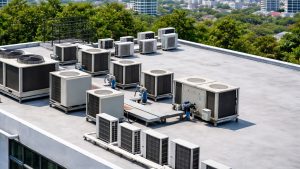
Rooftop units (RTUs) are all-in-one heating, ventilation, and air conditioning systems housed in a single cabinet. They are installed on the roof, which saves valuable indoor space. Cool air is delivered throughout the building via ductwork.
- Best for: Single-story commercial buildings, retail stores, and warehouses.
- Pros: Space-saving design, easier installation and maintenance compared to split systems, and cost-effective for large, open layouts.
- Cons: Less suitable for multi-story buildings and can be less efficient if ductwork is not properly designed and sealed.
2. Chiller Systems
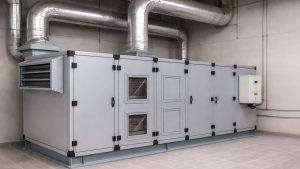
Chillers are a popular choice for very large commercial and industrial buildings. They work by cooling water, which is then pumped through pipes to air handling units (AHUs) or fan coil units (FCUs) located throughout the building. These units then blow air over the chilled pipes to cool the space.
- Best for: Skyscrapers, hospitals, university campuses, and large industrial facilities.
- Pros: Highly efficient for cooling massive spaces, long lifespan, and can be easily scaled.
- Cons: High initial installation cost and require a dedicated mechanical room.
3. Variable Refrigerant Flow (VRF) Systems
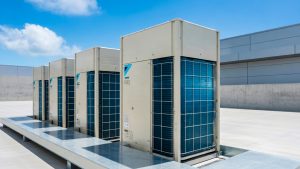
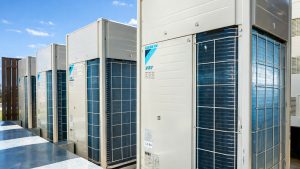
VRF technology is one of the most advanced and flexible options available today. These systems use a single outdoor condensing unit connected to multiple indoor units. Each indoor unit can be controlled individually, allowing for different temperature zones within the same building. VRF systems can also provide simultaneous heating and cooling in different areas, making them an excellent air conditioning solution for commercial building environments with diverse needs.
- Best for: Office buildings, hotels, and mixed-use properties with varied occupancy and zoning requirements.
- Pros: Exceptional energy efficiency, zoned temperature control, and quiet operation.
- Cons: Higher upfront cost than traditional systems and requires specialized technicians for installation.
Specialized Air Conditioning Solutions for Shopping Malls
Shopping malls present unique challenges due to their vast open areas, high ceilings, and constant foot traffic. An effective air conditioning solution for shopping malls must deliver powerful cooling to common areas while also providing flexibility for individual retail stores.
The sheer volume of space, combined with heat generated by lighting, electronics, and thousands of daily visitors, demands a system that is both powerful and incredibly efficient. A combination of chiller systems for the main concourses and VRF or packaged units for individual tenant spaces is often the most effective strategy. This hybrid approach ensures that the large common areas remain comfortable, while each store can manage its own climate. This tailored air conditioning solution for shopping malls helps optimize energy use and tenant satisfaction.
For developers and managers looking to implement or upgrade, it’s smart to consult with experts who understand the specific demands of retail environments. A well-designed air conditioning solution for shopping malls not only keeps shoppers comfortable but also contributes to a better overall shopping experience, encouraging them to stay longer.
Comparison of Air Conditioning Systems
Choosing the right air conditioner for building projects can be easier when you compare the options side-by-side. Here is a table summarizing the key features of each system.
|
System Type |
Best For |
Energy Efficiency |
Initial Cost |
Key Advantage |
|---|---|---|---|---|
|
Rooftop Units (RTUs) |
Single-story commercial buildings, retail |
Moderate to High |
Medium |
Space-saving and self-contained |
|
Chiller Systems |
Very large buildings, campuses, hospitals |
Very High |
High |
Powerful, scalable, and efficient for massive loads |
|
VRF Systems |
Offices, hotels, mixed-use buildings |
Highest |
High |
Zoned control and simultaneous heating/cooling |
|
Ductless Mini-Splits |
Smaller zones, server rooms, additions |
High |
Low to Medium |
Flexible installation and individual control |
Can You Buy an Air Conditioner Online?
While residential window units and portable ACs are easy to find, the process to air conditioner buy online for commercial applications is different. You typically won’t add a chiller system to a virtual cart and check out. Instead, the online process involves research, consultation, and quotation.
Many leading HVAC suppliers and manufacturers have detailed websites where you can browse products, download technical specifications, and compare models. The best way to air conditioner buy online for a commercial project is to use these platforms to identify potential solutions and then contact the company’s sales engineers. They can provide a detailed quote based on your building’s specific requirements. This consultative approach ensures you get a system that is properly sized and configured. When you air conditioner buy online, you are often initiating a partnership with a provider who will guide you through design, installation, and maintenance.
Finalizing Your Air Conditioning Solution for Building Success
Selecting the right air conditioning solution for building projects is a critical investment that impacts operational costs, occupant comfort, and property value for decades. From powerful chillers for massive structures to flexible VRF systems for mixed-use properties, the technology you choose must align with your building’s unique needs.
For any large-scale project, whether it’s a new air conditioning solution for commercial building development or retrofitting an older structure, professional consultation is non-negotiable. An experienced HVAC partner can perform a detailed analysis of your property, recommend the most suitable air conditioner for building applications, and ensure a flawless installation.
Frequently Asked Questions (FAQ)
1. What is the most energy-efficient air conditioning solution for a large building?
For most modern commercial buildings, VRF (Variable Refrigerant Flow) systems are considered one of the most energy-efficient options due to their ability to provide zoned cooling and modulate refrigerant flow based on demand. For extremely large facilities like airports or hospitals, modern water-cooled chiller systems often provide the best efficiency at scale.
2. How long do commercial air conditioning systems last?
The lifespan of a commercial HVAC system depends on the type, quality of installation, and maintenance frequency. Generally, you can expect the following:
- Rooftop Packaged Units: 15-20 years
- Chiller Systems: 20-30 years
- VRF Systems: 15-25 years
Regular maintenance is the most critical factor in extending the life of any system.
3. How much does an air conditioning solution for a commercial building cost?
The cost varies dramatically based on the building’s size, the type of system selected, and regional labor rates. A small commercial space might cost a few thousand dollars, while a comprehensive system for a large office tower can run into the millions. It’s essential to get a detailed quote from a qualified HVAC contractor.
4. Can I use multiple types of air conditioning systems in one building?
Yes, a hybrid approach is often the most effective solution. For example, a building might use a central chiller system to cool large common areas and separate VRF or ductless systems for office suites or server rooms that require precise temperature control.
5. What is the importance of maintenance for a large-scale air conditioning solution for building applications?
Regular maintenance is crucial. It ensures the system runs efficiently, prevents costly breakdowns, improves air quality, and extends the equipment’s lifespan. A planned maintenance agreement with a professional HVAC service provider is a wise investment for any building owner.